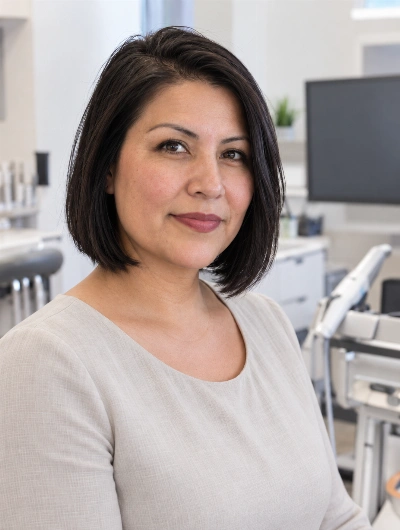
Nora Mercer is Digital Dentistry & Dental Technology Editor at The Young Dentist, covering dental AI, imaging, intraoral scanning, CAD/CAM, 3D printing and connected clinical workflows. She focuses on what technologies actually change in practice and separates independent evidence from technical specifications, clinician experience and manufacturer claims.
Nora Mercer studied dentistry at the University of Michigan School of Dentistry, where she completed the Doctor of Dental Surgery programme. Her training covered biomedical sciences, oral disease, diagnosis, prevention, restorative dentistry, treatment planning and comprehensive patient care. The programme combined academic education with supervised clinical practice, giving her experience in assessing patients, interpreting clinical findings, developing treatment plans and providing preventive and restorative care.
During her dental education, Nora developed a particular interest in restorative dentistry and dental imaging. She also became increasingly interested in the early stages of digital dental workflows, including the way clinical information is captured through imaging and scanning, transferred into planning systems and used to support restorative and other forms of treatment. This provided the foundation for her later work with digital dentistry and dental technology.
After completing dental school, Nora worked in general dental practices in Michigan. Her clinical experience included restorative care, preventive dentistry, treatment planning and the everyday management of patients with a wide range of oral health needs. General practice gave her practical experience of adapting treatment to individual patients and evaluating how clinical systems and technologies perform outside controlled demonstrations or ideal working conditions.
As digital technologies became more common in dental practice, Nora gained experience with intraoral scanning, digital impressions, computer-assisted restorative workflows and digital treatment planning. Her work involved considering how digital systems could be incorporated into routine clinical care, including their effects on accuracy, communication with laboratories and patients, chair time, training requirements and integration with existing practice workflows.
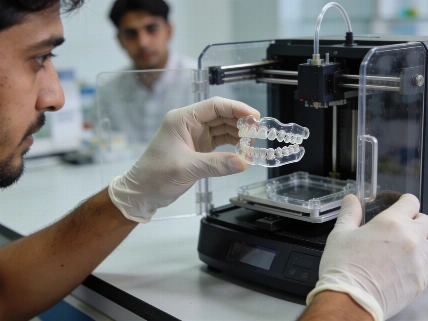
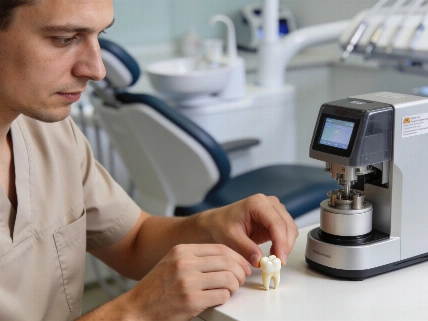
Her professional interests later expanded into CAD/CAM dentistry, digital radiography, cone-beam imaging, chairside restorative systems and digital implant-planning software. She also developed experience with dental 3D printing, remote monitoring, cloud-based practice platforms and artificial intelligence used in dental imaging and clinical workflows.
Alongside her clinical background, Nora’s professional path includes work in dental technology education and healthcare publishing projects. These roles gave her experience reviewing technical and clinical information, working with material produced for dental professionals and examining how new systems and products are presented to clinicians. Her work included evaluating information from technical specifications, manufacturer documentation, clinician experience and independent research.
Her experience in dental technology also involved following the development and implementation of digital systems used across contemporary dental practice. This includes imaging platforms, intraoral scanners, CAD/CAM systems, dental 3D printers, digital implant-planning tools, remote monitoring systems, practice software and artificial-intelligence applications designed to support imaging and diagnostic workflows.
Nora is now Digital Dentistry & Dental Technology Editor at The Young Dentist. Her coverage includes dental AI, imaging, intraoral scanning, digital impressions, CAD/CAM, chairside restorative workflows, dental 3D printing, digital implant planning, remote monitoring, digital records and connected practice software. Her role also involves following developments across dental technology companies and product ecosystems and assessing how new tools are being introduced into clinical practice.
Digital dentistryThe use of digital and computer-controlled technologies in dental diagnosis, treatment planning, restorative workflows, manufacturing and clinical care.
Dental AIThe application of artificial intelligence and machine-learning techniques to oral-health data for tasks such as imaging analysis, diagnosis support, treatment planning, patient communication and practice workflows.
CAD/CAM dentistryThe use of computer-aided design and manufacturing systems to design and produce dental restorations, prostheses and other components within digital laboratory and chairside workflows.