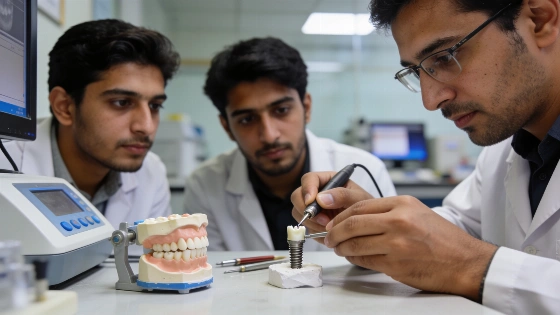
At Innovative Dental Laboratory in Karachi, periodontology residents and house officers from Altamash Institute of Dental Medicine followed an implant case beyond the dental chair. They saw how clinical records become a final implant prosthesis.
Pakistan's dental education landscape is also expanding its use of digital modules and in-house laboratories. A related October 2026 report described digital laboratory training for orthodontic and prosthetic education at another Pakistani dental programme.
From clinical records to a final restoration
The laboratory team showed how conventional and digital methods work together. The case pathway covered clinical information capture, digital design, CAD/CAM-based fabrication and delivery of the completed prosthesis for clinical placement.
Modern implant prosthodontics commonly brings together CBCT data, digital scans, data matching and computer-aided design before manufacturing. A digital implant workflow review describes the same move from clinical records to laboratory production.
The laboratory became part of the teaching.
Dr. Zaheer Hussain Chachar, head of the Department of Periodontology at Altamash Institute of Dental Medicine, made the special request for the visit. The department organised the programme.
International laboratory protocols may combine digital impressions, virtual waxing, milling or printing of provisional and definitive restorations, and fit verification on models before clinical fixation. These stages help connect the planned implant position with the restoration delivered to the patient.
Communication becomes part of implant planning
The laboratory team also discussed the working relationship between the periodontist, restorative dentist, dental laboratory and dental technician. Information must move accurately between the clinical and technical teams at every stage.
That information guides the design and fabrication of the planned implant restoration.
A related report on digital dental production appears in an earlier report on laboratory-based training at Fatima Memorial College of Dentistry. The AIDM visit covered a different prosthetic setting. It followed implant records through scanning, design and manufacture.
For residents and house officers, the lesson was direct. Implant education also requires an understanding of the laboratory decisions that shape the final restoration.
The visit linked treatment planning with the work of technicians. A clinical appointment cannot be separated from the fabrication process that follows it.
Digital skills move beyond the clinic
The trainees saw intraoral scanning, digital dentistry, CAD/CAM technology and digital implant prosthetic workflows. These tools connect treatment information with design and manufacturing inside the laboratory.
The result was a clearer view of how current implant prosthodontics is organised.
A wider educational shift is taking place alongside a more formal publishing environment. The Pakistan Armed Forces Medical Journal's 2026 issue records show a regular publication schedule. They also show continuing attention to limits and requirements for medical and dental material. The journal's 2026 issue information records those details.
The Department of Periodontology thanked Mr. Asif Asrar and the entire team at Innovative Dental Laboratory for the arrangements, hospitality and support.
The visit placed postgraduate learners beside the technical workflow that determines how implant plans become restorations. Dental education benefits when trainees understand where an implant is planned and placed, as well as how the laboratory turns that plan into the prosthesis the patient receives.
Available reporting on the specific visit does not include direct comments from AIDM, Innovative Dental Laboratory, Dr. Zaheer Hussain Chachar or a regulator. This account is based on the published report of the educational activity.