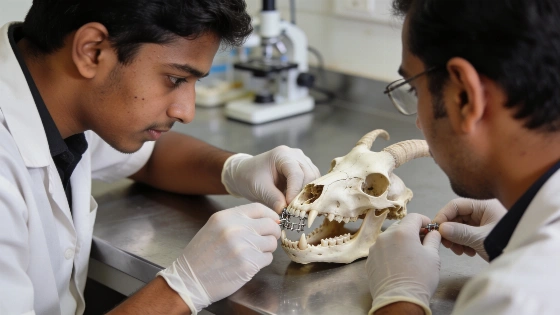
At Hamdard University Dental Hospital, third-year BDS Batch 26 students used goat mandible specimens to practise dental splinting under supervision.
The Department of Periodontology organised the one-day workshop. It moved students beyond lecture-based theory and gave them a practical setting for working through each step of the procedure. [[smi_quote:{"style":"centered","text":"Independent web results did not verify the workshop's date, participant list, programme or outcome, and no official Hamdard University publication confirming those details was found."]}]
From lecture principles to supervised practice
The session began with a short lecture and a video presentation by Dr. Amna Arsalan. Students then used goat head/mandible specimens as an experimental teaching model. Faculty members guided them through the principles and techniques of dental splinting.
Prof. Syed Imran Hassan, Dr. Amna Arsalan, Dr. Bilal Ansari and Dr. Saad Ali led the practical work. Their guidance let the teaching team watch how students applied classroom concepts to a hands-on task.
The model was not a patient. It gave Batch 26 students a controlled way to handle the procedure and follow its sequence. That kind of practice can help students become familiar with splinting before they use the knowledge in appropriate clinical settings. [[smi_quote:{"style":"sideline","text":"The available independent results contain no verified figures for student numbers, session length, feedback findings, skill assessments or subsequent clinical outcomes."]}]
Feedback built into the teaching design
Dr. Hafsa Feroze of the Department of Dental Education developed the workshop's learning objectives and collected student feedback. Organisers could use that process to review the learning experience and plan improvements for future hands-on activities. Independently verifiable findings from the feedback exercise were not available in the reviewed web material.
Prof. Syed Imran Hassan, Head of the Department of Periodontology and Principal of Hamdard University Dental Hospital, provided administrative support. The session ended with certificates for participating students.
Simulation and procedural practice have gained a larger place in dental education. A similar training-focused approach appeared in an earlier workshop report about clear aligner planning and fabrication at Fatima Memorial College of Dentistry. The Hamdard session dealt specifically with periodontal teaching and dental splinting.
Independent background information on earlier comparable Hamdard workshops was not identified. The same was true for information about using goat jaws in teaching or a university policy on preclinical splinting practice.
Hamdard's workshop followed a practical format. Students received an explanation, watched a video, worked on a model and shared feedback in one session. The structure offered more than terminology to remember. It gave students a controlled chance to build procedural familiarity without confusing experimental practice with patient care.
The reported workshop details and named participants remain dependent on the original account. No independent authoritative confirmation was found.