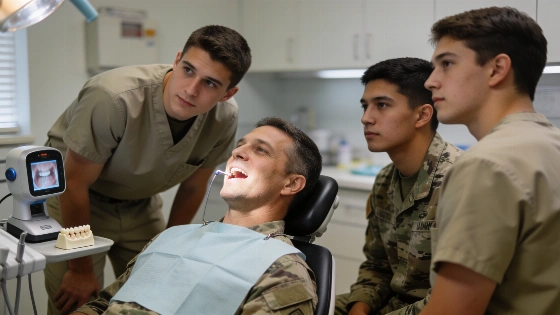
At Smith Dental Clinic, three new Army dentists worked alongside Air Force residents during a four-day course built around chairside digital dentistry.
The Digital Dentistry Course brought together dentists from Fort Carson's Advanced Education in General Dentistry Program and the U.S. Air Force Academy's 10th Dental Squadron. Fort Carson Dental Activity hosted the training, linking technical instruction to the operational need to treat Soldiers and Airmen efficiently.
Military dental clinic personnel regularly rehearse responses to medical emergencies and are expected to know where emergency equipment is located.
Shorter appointments can help return service members to primary duties sooner.
Training built around chairside digital workflows
Digital dentistry lets clinicians design and fabricate restorations at the clinic, then deliver them during the same dental visit. That cuts out the extended sequence tied to off-site laboratory communication and longer processing timelines.
Lt. Col. Christian Petersen, the Fort Carson AEGD assistant program director, said the course introduces capabilities available across both Army and Air Force AEGD residency programs.
In a separate dental-clinic incident, Health.mil said clinical skills, emergency-care training and Advanced Cardiac Life Support strengthen personnel's ability to respond to urgent situations and support broader medical readiness. The report does not document results or continuation of the Fort Carson digital dentistry course.
The programme includes more than 12 hours of didactic education and 12 hours of hands-on instruction. Participants use the high-tech dental systems needed to design and make custom ceramic and implant restorations during a single visit. They then apply the training in live patient encounters.
A shared foundation for military dental practice
Fort Carson's AEGD programme is intended to produce competent, productive clinicians who can manage patients requiring complex multidisciplinary treatment efficiently. The participating Air Force dentists come from a similar programme at the U.S. Air Force Academy.
During their one-year residencies, the dentists will incorporate digital dentistry into their respective clinics while treating empaneled patient populations. Petersen said the intended outcomes include shorter treatment timelines. He also cited faster return-to-duty timeframes and more readiness-generating care.
Dental schools may introduce students to same-day digital dentistry, but military residency training adds a common operational framework. "Digital dentistry decreases the need for multiple appointments, communication with off-site dental laboratories, and long processing and fabrication timelines," Petersen said. "Through use of this technology, Soldiers and Airmen spend less time in the dental chair and more time in their primary place of duty, expediting treatment of disease and return to health."
Health.mil's separate account of emergency preparedness in a military dental clinic shows that readiness extends beyond planned restorative care. Personnel train for medical emergencies and maintain familiarity with emergency equipment. The available official material provides no independent figures on course participants, restorations completed, treatment duration, equipment costs or measurable reductions in chair time.