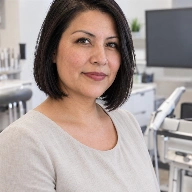
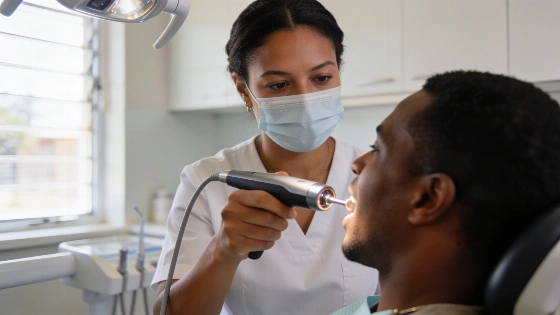
Singh began her digital shift with clear aligner therapy in 2019. Her practice now links scanning, planning, design, communication, treatment and review through one clinical dataset.
The goal is practical. Technology should remove avoidable breaks between the steps that shape patient care. It should not replace conventional dentistry.
Align Technology says its digital ecosystem includes Invisalign, iTero intraoral scanners and the exocad CAD/CAM platform. The company reports about 302,000 doctor customers and approximately 23.5 million patients treated with Invisalign over 29 years.
From clear aligners to a connected workflow
At first, Singh still took conventional impressions. She then transferred that analogue starting point into a digital treatment plan. "The disconnect was obvious: I was translating between two languages at every step, with each translation costing time and precision," she says.
The arrival of an intraoral scanner changed more than impression-taking. Singh says it changed how she diagnosed cases, explained conditions to patients and planned treatment.
Digital dentistry then moved beyond orthodontics. Each new layer closed a gap between capture, planning and delivery.
That was the real shift.
A 2023 systematic review found that intraoral scanners can assist with assessing caries, tooth wear and periodontal status, but they do not replace clinical examination and, when indicated, radiographic diagnosis.
Singh identifies the iTero Lumina scanner as the backbone of her workflow. Depending on the case, a scan can support planning, design, aligner manufacturing, monitoring and patient communication.
She uses one digital ecosystem to examine and discuss gum health, tooth health and occlusion.
"It is not the brand names; it's the architecture," she says. The value comes from one dataset moving through capture, plan, design, communication, treatment and review. Separate records do not have to be created and transferred between disconnected systems.
What patients and teams see differently
Digital visualisation lets Singh show patients findings from their own scan. She does not have to rely only on verbal explanations.
Patients can view areas of concern and simulations of proposed tooth movement. Singh says that can make consultations more collaborative and informed.
Visual clarity is not clinical certainty.
Simulations support discussion and informed consent. They do not guarantee an outcome.
The workflow also changes the daily mechanics of the practice. In the older model, information could be captured again and physically transported. Singh says a scan can now be taken once and used as a consistent reference point for later steps, subject to clinical verification and the needs of each case.
That can speed up case starts. It removes waits for couriered impressions and reduces problems linked to distorted or incomplete physical records.
A 2022 evidence review found that digital impressions can offer advantages in procedure time and patient comfort. Accuracy still depends on the clinical case, scan length and operator technique, as described in the 2022 evidence review.
Scanning can also become a skill that staff can learn and carry out when training and supervision are in place. Singh can then spend more chair time on clinical decisions and patient conversations instead of administrative handling.
This patient-centred use of technology also connects with the prevention and trust themes examined in an earlier dental profile. Singh's account focuses on how a digital record travels through clinical work.
Planning power still has biological limits
Integration can give Singh a more consistent longitudinal view of a patient. It can also help align orthodontic and restorative planning where clinically appropriate.
Better inputs may support monitoring and sharpen diagnosis. Singh says they do not replace clinical judgment.
"The biology of the individual patient still governs the result. The system predicts movement; the patient's tissues deliver it."
Her strongest caution concerns prediction before treatment begins. Digital planning requires the clinician to consider the full movement sequence before placing an aligner. That differs from reacting appointment by appointment.
The simulation remains a prediction. It is not a promise.
The same caution applies to claims about digital accuracy in different types of prosthodontic work. In long-span edentulous areas, stitching errors can build up when too few stable anatomical landmarks are available.
That limits the direct transfer of claims about digital precision from one indication to every other case. Research in dentomaxillofacial radiology also stresses standardised clinical assessment and expert review alongside technical image comparisons, particularly when digital diagnosis and artificial intelligence are involved.
Align Technology presents iTero Lumina as part of an integrated digital platform. The company's product positioning does not establish that a unified dataset automatically produces a clinical result.
Accuracy and diagnostic usefulness still depend on the indication and the quality of data capture. The distinction also appears in the Align investor overview.
That is the right standard for digital dentistry. Connected tools can reduce repetition, improve explanations and organise clinical information. They cannot turn an estimate into an outcome.
Singh's model is persuasive because it treats technology as infrastructure for better decisions. Diagnosis, consent and professional responsibility still belong to the clinician.