Seven studies involving 164 patients reported PRF success rates of 90% to 100% in oroantral communication. Dr. Richard J. Miron's free CE webinar examines where that evidence fits in daily dental care.
A review of PRF for oroantral communication reported success rates of 90% to 100% across seven studies involving 164 patients, while concluding that PRF is better used as an adjunct for larger defects than as a standalone treatment.
The course targets two groups. One is made up of clinicians who are new to PRF. The other includes dentists who have considered regenerative dentistry but have not yet added it to their practices. The focus is practical use, not terminology alone. Topics include healing, patient outcomes and ways PRF may complement existing dental services.
Richard J. Miron remains active in PRF research beyond the webinar, appearing as an author on a recent peer-reviewed paper addressing platelet-rich fibrin in regenerative dentistry.
Participants will cover the biology behind PRF and its clinical role. They will also review how platelet concentrates have developed. PRF is an autologous matrix made from a patient's blood. It forms through natural clotting without chemical anticoagulants. Its thicker fibrin structure is linked to a more sustained release of growth factors than PRP, according to independent PRF guidance.
The learning objectives include regenerative procedures, facial esthetics and autologous therapies. They also address ways to broaden clinical capabilities and set a practice apart.
Facial esthetics stays within the same regenerative discussion. The programme does not treat it as a separate commercial subject. Dentists will consider how these approaches might fit with current services. The course remains educational and focuses on emerging technologies.
That wider practice setting matters. Dental professionals are assessing how new technology and clinical education may change the services they offer. An earlier technology report shows the publication's interest in tools that may change dental workflows. This webinar deals with biological regeneration, not software.
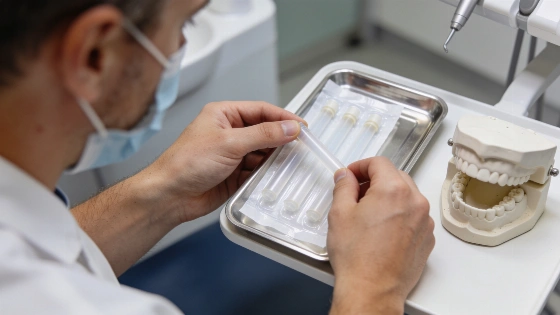
Current clinical literature places PRF within oral surgery and implant-related regenerative dentistry. It is not treated only as a promotional concept, as shown in an ongoing clinical literature review. Chairside summaries commonly describe a process that uses approximately one or two tubes of the patient's blood. The blood is centrifuged without anticoagulants. The resulting fibrin membrane is then placed at the surgical site.
Training is also expanding beyond dentistry into biomaterials and platelet concentrates. That shift appears in formal course offerings from SL Mandic.
Dr. Miron will discuss trends that may shape regenerative dentistry. The objectives do not present PRF as a universal solution. They describe an evolving approach that requires knowledge of biology, application and practice fit. Debate continues. A recent discussion of 2026 network meta-analysis findings reported no clear efficacy difference between leukocyte-rich and leukocyte-poor PRP for functional improvement against placebo or hyaluronic acid.
For dentists looking for an entry point, the free VOD course offers a clear sequence. Start with PRF. Compare it with PRP. Review dental and facial esthetic uses. Then consider where the approach might fit in an existing practice. The course connects emerging science with implementation. It does not promise a shortcut to clinical change.