
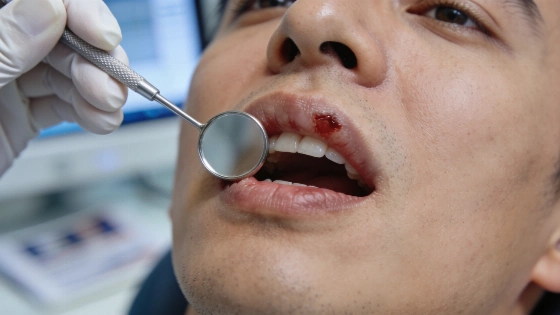
Repeated placement of products such as Zyn and Velo creates a local exposure that many general practices can miss. The gingiva may show the habit before the patient mentions it.
That makes the dental chair a useful place to spot it. Nicotine narrows blood vessels regardless of how it is delivered. Pouch users also expose the same area again and again.
In one comparative study, oral mucosal lesions were observed in 79% of nicotine-pouch users and 89% of snus users. Erythema and subjective oral symptoms were more common with pouches, while pronounced hyperkeratotic changes were more characteristic of snus.
Make pouch use a separate history question
Ask directly: "Do you currently use nicotine pouches such as Zyns or Velo?" That question is more useful than a general tobacco question. Patients may not count these products as tobacco because brands such as Zyn are marketed as tobacco-free and smoke-free.
For anyone who reports regular use, ask which side they use. Ask how often they place a pouch and how long each pouch stays in position.
In January 2025, the FDA authorized the marketing of 20 ZYN nicotine-pouch products after reviewing Premarket Tobacco Product Applications. The products remain regulated as tobacco products, and the authorization permits marketing without declaring them safe or approving them as smoking-cessation medicines.
Document the tissue before it changes
Set a baseline with intraoral photographs or an intraoral scan. Add conventional periodontal probing. Frequent users should have the area checked at every recall appointment, not only during annual periodontal charting.
That schedule can catch early recession, changes in tissue texture or localized inflammation. Start with the basics.
Track more than millimetres of recession. Check for keratosis or texture changes at the contact site. Look for inflammation that does not fit the patient's wider periodontal condition. Existing photography and scanning workflows are usually enough. Side-by-side images can show patients a developing change more clearly than a verbal warning.
The research base explains the need for records. A 2022 population survey in Great Britain confirmed rapid uptake of nicotine pouches. It called for continued monitoring because long-term oral and systemic effects remain poorly characterized.
A 2023 review in the International Journal of Dentistry described plausible mechanisms for nicotine-related periodontal effects independent of delivery format. A 2025 BMC Oral Health case report described gingival recession appearing precisely at habitual pouch-placement sites.
Independent clinical evidence remains limited. Published reports describe contact-related redness, thickening and other local changes. They do not establish a reliable long-term estimate of cancer or periodontitis risk, as reflected in a clinical comparison of oral lesions.
Counsel without turning the appointment into a lecture
Keep the advice practical and nonjudgmental. Patients can rotate placement sites, avoid overnight use and consider lower nicotine strengths.
For patients using pouches to stop smoking, the products may represent the lesser of the available harms because their effects appear more localized than those associated with smoking or vaping. They are not risk-free for oral health.
Clinicians should discuss reported concerns that include gum recession, possible precancerous lesions and xerostomia. Limited evidence should not be presented as settled causation.
Inspection of suspicious tissue also fits with earlier screening coverage. That coverage showed how oral examinations can bring tobacco-risk discussions into routine care.
According to the FDA's FDA authorization notice, the decision reflected a population-level assessment of whether the products could reduce harm for adults who use nicotine while limiting appeal to nonusers and young people. It was not a finding that the products are safe or approved for cessation.
Some users take nicotine pouches for perceived cognitive or focus benefits instead of trying to quit smoking. They may not consider themselves nicotine-dependent. Once the potential oral effects are explained, some may be open to stopping.
A brief, specific conversation can identify a periodontal risk. It can also create an opening for behaviour change.
General practice should treat nicotine pouch use as a distinct periodontal risk factor in the history and recall workflow. Large longitudinal studies are still absent. That is not a reason to ignore visible site-specific changes.
Record those changes carefully. Compare images or scans over time. Share systematic observations through study clubs and specialty groups.
For now, the professional response is simple: ask directly, document objectively and counsel proportionately.