
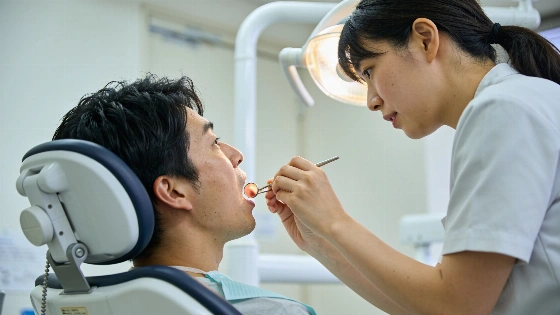
At Hiroshima University Hospital, researchers examined 30 Japanese adults with hemophilia. Seven met the study's criteria for oral hypofunction. Early-stage periodontitis appeared across the group.
In Japan, oral hypofunction is treated as a disease, with diagnosis requiring at least three of seven findings, including poor oral hygiene, dryness, reduced bite force, impaired lip-and-tongue movement, lower tongue pressure, impaired chewing, or swallowing problems.
Early periodontal disease was the clearest signal
The median PISA value pointed to early-stage periodontitis. Most participants also had raised oral bacterial counts. Yet the study found no significant differences in oral environmental measures between people with and without oral hypofunction.
HIV status did not change that result. The HIV-positive and HIV-negative groups showed no significant separation in the oral environmental outcomes measured by the researchers.
That is not a reason for less frequent care. It points instead to the same need for prevention across the hemophilia group.
As of October 2, 2026, the FDA had extended its review of Novo Nordisk's experimental hemophilia A medicine denecimig because work was continuing to address manufacturing-site observations. The application covered adults and children, including patients with inhibitors.
Prevention depends on continuity
Regular dental visits and daily oral hygiene can help limit periodontal disease progression and oral hypofunction. The study's message matches the wider prevention approach described in an earlier prevention campaign.
Here, that approach applies to a medically complex patient population. Reviews of oral frailty describe prevention programmes that use screening, oral-hygiene advice, tongue and swallowing exercises, and timely referral to dental professionals.
The assessment needs to cover more than the gums. Periodontal inflammation alone cannot show every change in oral function. Bite force, chewing, swallowing, lip movement, tongue pressure, moisture, and bacterial burden can reveal different parts of a person's oral health.
For that reason, preventive care should rely on repeated oral evaluations rather than HIV status alone. NHS-like guidance cited in dental haemophilia materials also calls for regular examinations, care of the teeth and gums, and prevention to reduce the likelihood of extractions and bleeding.
Small study means careful interpretation
The evidence remains exploratory. Only 30 participants took part. There was no healthy control group, and the cross-sectional design cannot show how oral findings change over time or prove that one factor caused another.
Those limits narrow how far the results can be generalised. They do not remove the practical finding that early periodontal disease was present in this group.
The research received approval from the Ethics Committee of Hiroshima University under approval number E-4241. For people with hemophilia, the clearest conclusion is simple: continuous oral hygiene management and regular dental review should be core preventive care for the whole population, including people who are HIV-positive.