Oral diseases affect around 3.5 billion people worldwide. The World Health Organization estimates that about three-quarters of those affected live in low- and middle-income countries, as detailed in its Global oral health status report.
Their risk factors overlap with those of other major diseases. These include added sugar, tobacco and harmful alcohol use. Unequal access to care and healthy food also matters, while WHO identifies inadequate fluoride exposure as a shared risk factor.
Major oral conditions include untreated caries in permanent teeth, severe periodontitis and complete tooth loss. A systematic analysis published in The Lancet Public Health recorded a 3.07% rise in cases of major conditions over a four-year period.
For the authors, prevention has to start well before anyone reaches a dental clinic.
Shared risks call for joined-up prevention
The European Federation of Periodontology (EFP) and the European Association of Dental Public Health (EADPH) convened the working group. Its members included specialists in periodontology and cardiology, along with experts in diabetes care and family medicine. Public-health, social-care and health-education specialists also took part. The group urges policymakers to link oral health with broader chronic-disease strategies and address shared behavioral and social drivers, rather than treating each disease in isolation.
The World Health Organization's global action plan sets a target of a 10% relative reduction in the combined prevalence of major oral diseases and conditions by 2030, compared with 2019. It also calls for oral disease prevention and care to be integrated into national noncommunicable disease strategies, primary healthcare and workforce training.
The clearest link between gum disease and wider health concerns involves diabetes. The consensus describes a two-way relationship and says treating periodontitis can help people with diabetes manage blood sugar.
A review by Preshaw and colleagues also describes diabetes as increasing the risk and severity of periodontitis. Periodontal inflammation may complicate glycemic control. The review says treatment can improve glycemic measures in people with type 2 diabetes, but that does not establish that periodontitis causes cardiovascular or other diseases. It appears in Diabetologia's analysis.
Professor Moritz Kebschull, a Past President of EFP and lead author, said periodontists and public-health dentists developed the recommendations alongside cardiologists and family doctors. EFP Secretary General Professor Anton Sculean says doctors and nurses should be equipped to give basic oral-care advice. Pharmacists should be prepared to do so as well. Dentists, in turn, can spot signs of wider health problems, including possible undiagnosed diabetes.
Daily prevention and routine care
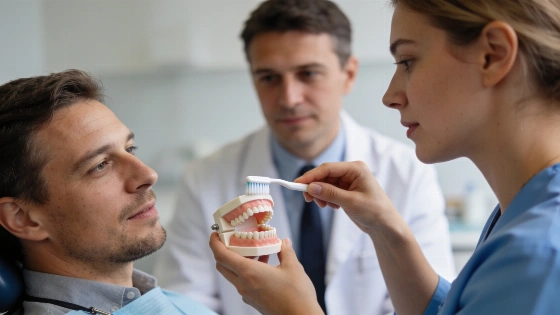
The consensus recommends brushing twice a day with fluoride toothpaste and cleaning between teeth daily. It also advises limiting added sugars and avoiding tobacco or harmful alcohol use. Dental visits should take place at intervals suited to each person's risk and need. Effective plaque removal is central to gum health.
Published reviews cited in the paper report benefits from oscillating-rotating powered toothbrushes. The consensus describes stannous fluoride toothpaste as a complement to mechanical cleaning. These points support informed choices, not a claim that one product suits everyone.
Access to oral health care also depends on the wider care system. In a related example of coordinated prevention and access to services, earlier reporting examined calls to connect oral and mental health care.
Professor Andreas Stavropoulos, EFP Treasurer and co-author, cited an estimated annual global cost of US$710 billion for oral diseases. He said most of that burden is preventable. The paper calls for oral health to feature in prevention plans and shared records. It also recommends referral pathways and routine care where appropriate, alongside stronger oral-health education across health professions.
The paper appeared open access in Periodontology 2000. It was presented on September 3, 2026, at an International Association for Dental Research meeting in Lisbon during a symposium supported by Procter & Gamble. That industry support is relevant context; EFP and EADPH convened the consensus.