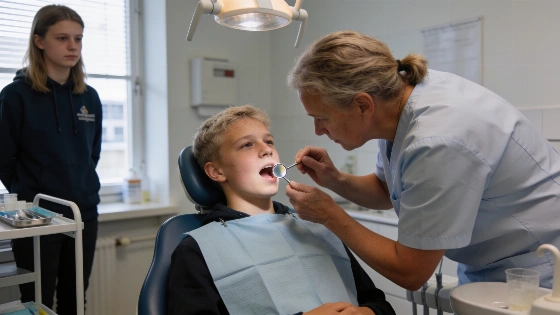
Dental examinations in Swedish secure youth homes found a sharp gap between identifying a need and providing care. Of 87 young people referred for treatment, only 33 had received the care they needed. The study is called Hål i samhällsvården.
The scale of need was high. Almost all 107 young people examined had an oral health problem. Decay affected more than twice as many teeth as among young people generally, and just over eight in ten needed further care.
A referral alone did not secure treatment.
Referrals stalled as responsibility passed between services
When treatment required approval of a cost estimate, approval took an average of 60 days after the referral arrived. In one case, the wait was 381 days. The estimate had first been rejected because the young person's regular dental clinic said it should pay only for emergency treatment in another region.
Records cited in the study describe young people moving between placements. At times, staff or transport were unavailable. Some young people did not want to attend. Information about dental needs did not always follow them when a placement changed. After leaving care, some were expected to contact a dentist themselves.
A referral is not an appointment. Someone must arrange transport and follow up.
Young people need adults to help them reach care
Interviews showed that young people wanted to look after their teeth, but could lack the energy to prioritise their health. Security procedures sometimes made oral-care products harder to access. They could also complicate dental visits. Young people said they wanted help building routines and having their needs recognised. Getting to appointments was another concern.
Elsa Carlson, a consultant in paediatric dentistry and doctoral student at Jönköping University, said that asking about toothache alone can miss problems. Fewer than one in three young people reported dental problems during SiS admission interviews, despite the more extensive needs found in dental examinations. The researchers say a thorough examination by a dental professional can identify needs young people may not mention themselves.
The study was presented on 6 October in a webinar in the Utblick: Socialtjänst series. Its findings connect with a separate call for coordinated care between oral and mental health services in a report from Spain. The Swedish study focuses on how responsibility for care follows young people in placement.
Social services rarely received feedback from dental services about young people's needs, the report says. That made it harder to monitor health during placement. The researchers call for clearer communication between social services and youth homes, with dental services included in the exchange. They also call for thorough examinations and staff training in oral health. Clear arrangements with nearby dental clinics are another recommendation. The researchers propose reviewing payment-responsibility rules so treatment does not stall while regions decide who pays. In the wider policy context, the Swedish government has commissioned proposals to strengthen monitoring and oversight of healthcare providers, as described in its oversight reform announcement.
Sweden's dental-care rules also change when young people reach adulthood. According to SverigeFokus, adult patients can receive an annual dental subsidy and protection against high costs. They pay the first 3,000 Swedish kronor themselves during each 12-month period.
SiS runs 22 secure youth homes across Sweden, with approximately 700 places. During a placement, SiS is responsible for care and daily life at the home. Social services remain responsible for following up on the young person's situation. The homes serve young people placed under the Care of Young Persons (Special Provisions) Act, known as LVU, as well as young people convicted of serious offences. Separately, Stockholm's municipal guidance says foster families must ensure children in their care can access medical and dental care, as set out in Stockholm's foster-home guidance.