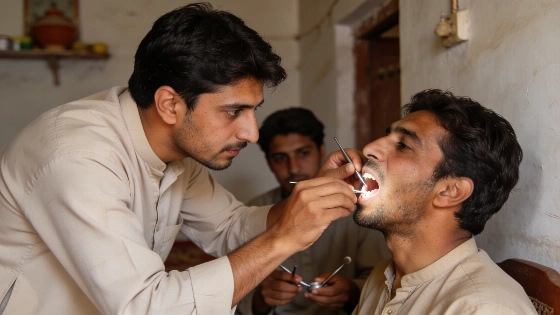
At the village otak on September 24, attendees could seek dental checks and medical consultations. Physiotherapy support was also available, along with medicines where required and advice on preventing health problems. More than 300 people reportedly received care. Available independent search results did not verify the event. They also could not verify the reported attendance or identify the organisers. Searches found no statement from Sindh health authorities or Sanghar district officials. Nor did they turn up comments from Bhittai Dental and Medical College or the named sponsors.
The reported total covers people served across all three departments. The number examined by the dental team was not recorded separately.
In a six-month programme involving 357 pupils at five government schools in Karachi, the prevalence of dental caries fell from 38.4% to 19.9%, while the share of pupils with normal visual acuity rose from 77% to 94.8%.
Oral checks found common conditions and gaps in awareness
Qualified BDS doctors and dental students examined participants. They found dental caries and gingivitis; some attendees also had dental fluorosis. The team offered individual guidance on brushing and oral hygiene. It also discussed prevention. Organiser Hira Karim said many attendees had limited knowledge of proper brushing. Awareness of regular brushing was also low, she said, as was understanding of links between oral and general health.
A Pakistani publication discussing the Karachi school-health study recommended a comprehensive programme in Sindh with regular dental and medical check-ups. It also called for hygiene education and nutrition support, alongside deworming and physical activity. Safe water and patient referrals were part of the recommendations too, as detailed in its school-health study review.
Medical personnel provided general consultations and health guidance. The team included a senior doctor with an MBBS qualification. Final-year Doctor of Physical Therapy students assessed participants and advised them on mobility and physical health.
On October 6, 2026, WHO reported an update to its NCD STEPS module for oral-disease surveillance. The update aims to support comparable population data for planning and evaluating public programmes.
A personal connection to Abdul Karim Village
Hira Karim, a final-year Bachelor of Dental Surgery student at Bhittai Dental and Medical College, or BDMC, in Mirpurkhas, organised the camp at the village otak with Zeenat Zulfiquar and Zehra Shah. Shahzad Akbar and Abdullah were also on the organising team. Colgate and Platinum sponsored the initiative; Searle also supported it. Karim said the village was named and registered in her father's name during his lifetime. He died many years ago, she said, but the place remains close to her heart.
She described residents as including farmers and families facing financial hardship. People from diverse communities live there, she said, and some have limited access to healthcare or health education. A similar effort to expand oral-health access appears in another oral health access initiative, though the Sanghar camp also provided medical and physiotherapy support.