
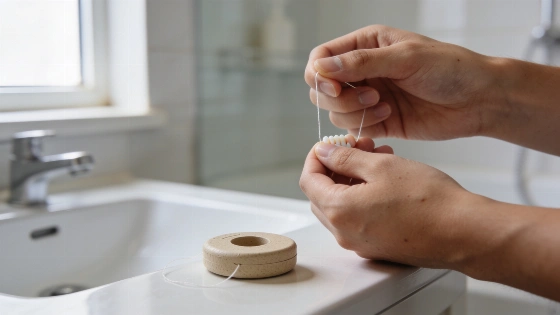
In 2025, the dental floss market is valued at USD 753.93 million. It is projected to reach USD 994.65 million by 2030, with a CAGR of 5.70%.
The U.S. FDA classifies dental floss as a regulated medical device under Regulation Number 872.6390, placing the category within the agency's device framework.
North America remains the largest regional market. Asia-Pacific is expected to grow the fastest as more consumers add interdental cleaning to their daily routines.
The health need is simple. Floss reaches plaque and food particles between teeth where toothbrushes cannot clean effectively. It is also low-cost and easy to carry.
More attention to periodontal diseases and cavities is pushing consumers toward gum care and interdental cleaning. Small habit. Broad market.
Online sales are changing how consumers find these products. Marketplaces and direct-to-consumer brands can sell specialty floss, premium formulations and sustainable alternatives without depending only on traditional retail stores.
Minnesota's Amara's Law has required products in 11 categories, including dental floss, to be sold without intentionally added PFAS since 2025. In 2026 testing, 17 of 19 dental-floss products met the requirement, an 89.5% compliance rate; the combined rate for three tested product groups was 92.8%.
Floss also sits within the wider affordability problem described in an earlier access report. For manufacturers, the opportunity is direct: make preventive products easier to find and easier to reorder before routine care becomes urgent treatment.
Environmental rules are putting pressure on product development. Consumers and regulators are examining plastic-based oral-care products, while PFAS restrictions are prompting reviews of coatings and materials.
PLA, silk, bamboo-derived fibres and other bioplastics are becoming more visible options. They are no longer peripheral experiments. Minnesota's testing also shows that dental floss is among the early oral-care categories where PFAS rules are affecting formulations and production practices.
In the United States, the FDA device listing places dental floss under Regulation Number 872.6390. The classification appears in the FDA device classification record.
Specialty products are adding another source of growth. Super floss and orthodontic threaders help people clean around braces, bridges, implants and other dental structures.
Flavours, coatings, ergonomic designs and dedicated formats give manufacturers more ways to separate their products. Cocolab describes Cocofloss as a repeatedly award-winning dental floss. The company announced Gayle Tait as chief executive officer on August 31, 2026.
Competition is medium in concentration. Named participants include Procter & Gamble, Johnson & Johnson, Colgate-Palmolive Company, Prestige Consumer Healthcare, 3M, Sunstar Suisse, Lion Corporation, The Humble, Dr. Wild & Co. AG, Perrigo Company, Water Pik, Philips Oral Healthcare, Cocofloss, Inc., Quip NYC Inc., Tom's of Maine, TePe Oral Health Care, Jordan AS, Eco-Dent International and Den-Mat Holdings, LLC.
Large companies bring established distribution and broad oral-care portfolios. Smaller sustainability-focused and direct-to-consumer brands compete through niche positioning and online reach.
Corporate oral-health programs add a public-health dimension. Colgate says its Bright Smiles, Bright Futures program has reached more than two billion children and their families since 1991. The company also links its initiatives to lower plastic waste and improved recyclability.
Interdental brushes and water flossers will keep shaping consumer choices. Some users want a different cleaning method.
The strongest brands will need credible preventive value and easy purchasing. Their materials must also withstand environmental scrutiny.
At USD 994.65 million by 2030, the market is moving beyond conventional floss volume. Daily prevention, specialty dental needs, online buying, regulatory compliance and material changes are reshaping the category.
Manufacturers that treat sustainability and usability as product requirements, rather than marketing extras, will be better placed for the next phase.