
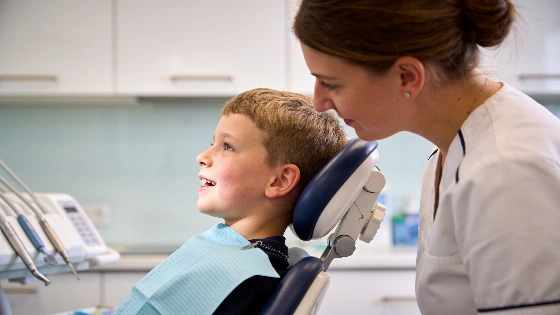
The tongue, lips and cheeks press on developing teeth and facial structures every day. Researchers are studying whether mouth breathing and other oral habits may affect facial and jaw development. The issue is not whether every young child needs braces. It is whether functional concerns can be found while growth is still underway.
The available NIH and WHO search results do not confirm current, precise prevalence figures for childhood mouth breathing, low tongue posture, tongue thrust or related orthodontic problems.
Why breathing and oral habits are being checked earlier
The tongue, lips and cheeks apply steady pressure to developing teeth and facial structures. Researchers have looked at mouth breathing, low tongue posture, tongue-thrust swallowing, thumb or digit sucking, lip incompetence and reverse swallowing patterns. These habits may be linked with crowding, crossbites and jaw discrepancies.
The evidence points to possible links, not one proven cause for every orthodontic problem. That matters when parents are deciding what to do next.
Research published through the United States National Institutes of Health has examined links between chronic mouth breathing and changes in facial growth. The NIH pages found in the current search results are mainly administrative or service pages. They do not provide an independent, up-to-date basis for setting a specific age for orthodontic assessment.
Other studies have examined airway health and orthodontic development. Clinicians are still looking at how early assessment might affect longer-term care.
The World Health Organization says oral diseases affect approximately 3.5 billion people worldwide. That figure covers the wider global burden. It does not show how common childhood breathing-related orthodontic problems are.
WHO materials support prevention and the integration of basic oral-health care into primary care as public-health priorities. They do not establish a causal relationship between childhood mouth breathing and jaw-growth abnormalities, and the available search results show no confirmed new official timetable or standard for early orthodontic assessment.
What early intervention can involve
An early check does not automatically lead to braces. A clinician may watch facial growth, examine breathing patterns or look for oral habits that have not gone away. They may also assess muscle function.
A child with mouth breathing, snoring, an open-mouth posture or speech concerns may need input from more than one field. Dentistry, orthodontics, speech therapy and ENT medicine can all be involved.
Orofacial myofunctional therapy deals with how the oral and facial muscles work. Sessions can include exercises and advice on tongue posture, lip posture, swallowing patterns and breathing habits.
Research into the therapy continues. Studies are examining its possible use alongside orthodontic treatment, airway management and speech therapy.
For parents weighing preventive oral-health priorities, routine care remains part of the picture. An earlier prevention report examined routine care and changing purchasing habits. This discussion is about development and function, not products.
What Cork providers are offering
O'Connor Dental Health in Ballincollig, County Cork, offers myofunctional therapy Cork patients can access within a broader oral-health approach. Information published by the practice says its programme deals with mouth breathing, tongue posture, swallowing habits and related developmental concerns.
The clinic also runs a Breathing Well Programme for patients with breathing-related challenges. That is the service's stated focus.
Dr Tony O'Connor and the team describe early assessment as a way to find habits that may affect facial growth and orthodontic development. Their programmes usually combine education, muscle-training exercises and monitoring.
"Early identification of harmful oral habits may help support healthier facial growth, breathing patterns and orthodontic development in children," Dr Tony O'Connor said.
Airway health now receives more attention in orthodontic discussions. Poor airway function may affect sleep quality, concentration, physical development and oral health.
Persistent mouth breathing and snoring warrant professional assessment. The source material does not show that myofunctional therapy or early orthodontic treatment will produce the same result for every child.
The practical point is simple. Orthodontists are looking at function before tooth alignment becomes the only visible concern.
Early assessment should still be individualised. Claims should match the evidence. Parents and clinicians can treat breathing patterns and oral habits as reasons for careful evaluation, not as automatic diagnoses or guaranteed reasons for treatment.