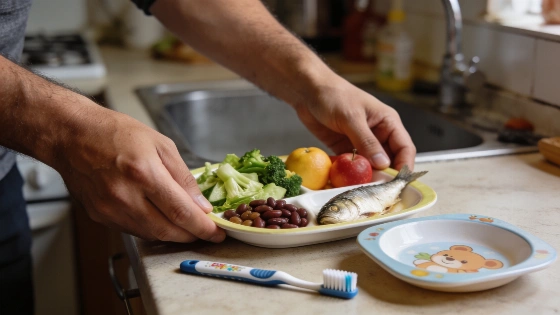
Researchers took a one-time snapshot of diet and oral health in 160 Turkish schoolchildren. Stronger adherence to a Mediterranean-style diet was associated with fewer cavities in permanent teeth and healthier gums. Higher BMI was independently associated with poorer periodontal health. The cross-sectional study cannot show that diet or weight caused those differences.
Published in BMC Pediatrics, the study examined children aged 6 to 13. Gülsevim Oda of Ankara Yildirim Beyazit University and Emine Merve Ekici of the University of Health Sciences in Ankara assessed dental health alongside diet and body measurements. The study was registered as clinical trial NCT06130189 on November 13, 2023. The Ankara Medipol University Local Ethics Committee approved it. Parents provided written consent, and children gave their assent.
The findings add dietary patterns to the familiar focus on limiting sweets and sugary drinks. They do not show that changing a child's diet will prevent decay or gum disease. The World Health Organization recommends keeping free sugars below 10% of total energy intake. It notes additional benefits when intake falls below 5%.
Diet quality tracked with dental and gum measures
Researchers used the Mediterranean Diet Quality Index for Children and Adolescents, known as KIDMED, to assess adherence. The index considers fruit and vegetables, along with fish, legumes and olive oil. It also accounts for habits such as eating sweets or drinking sugary beverages, and regularly skipping breakfast. Just over half of the children, 52.5%, had moderate adherence. KIDMED scores reflect a mix of dietary habits, not the effect of any single food.
Dental examinations recorded decay in primary and permanent teeth. Researchers also counted missing teeth and fillings. For permanent teeth, they used DMFT, a measure of decayed, missing and filled teeth. The team assessed plaque and gum inflammation. BMI-for-age z-scores accounted for age and sex.
The Family Nutrition and Physical Activity Screening Tool captured household practices. These included meal patterns and food availability, as well as screen time and opportunities for physical activity.
Higher KIDMED scores were associated with lower plaque and gingival-index scores. Researchers adjusted their analyses for age and sex, then accounted for BMI, family practices and toothbrushing frequency. Stronger Mediterranean-diet adherence remained associated with lower DMFT scores and lower gingival-index values.
Those adjusted results matter: the measured differences in brushing, BMI and family habits did not account for the diet associations. Still, the findings show correlation, not a protective effect.
BMI and family habits showed different associations
Nearly three in ten participants, 29.4%, were classified as obese. Higher BMI-for-age scores were correlated with more decay in permanent teeth. They also tracked with more plaque and gum inflammation. After adjustment, higher BMI remained independently associated with poorer periodontal health.
Family nutrition and activity scores were associated with lower decay measures in primary teeth. KIDMED and FNPA scores also moved together. Household routines and children's diets may overlap, but the study did not establish which factors drive the oral-health differences.
The researchers note that a Mediterranean-style diet includes foods rich in fibre and antioxidants. It is also typically lower in free sugars. Those features could plausibly support oral health, but the study did not test biological mechanisms. The authors also note that socioeconomic circumstances and dental-care access could affect diet and oral outcomes. Fluoride exposure could play a role as well.
Dental need and access are distinct issues: care after referral was also found to be incomplete for many young people in Swedish secure homes, a subject this Turkish study did not assess.
Preventive care still centers on brushing twice a day with fluoride toothpaste and limiting frequent sugary snacks or drinks. The WHO sugar guideline addresses free-sugar intake; it does not prescribe a Mediterranean diet. Dietary patterns do not replace established oral-hygiene measures or regular dental care.
The study received no specific grant funding, and the authors reported no competing interests. Because researchers measured diet and oral health at one point in time, the results cannot establish cause and effect. The authors call for longitudinal studies and interventions to test whether improving dietary quality changes children's dental or periodontal health. The study was published with DOI 10.1186/s12887-026-07477-z.
The WHO guideline recommends reducing free sugars to below 10% of total energy intake for children and adults. It notes additional benefit from reducing intake below 5%. The recommendations appear in the WHO sugars guideline.