
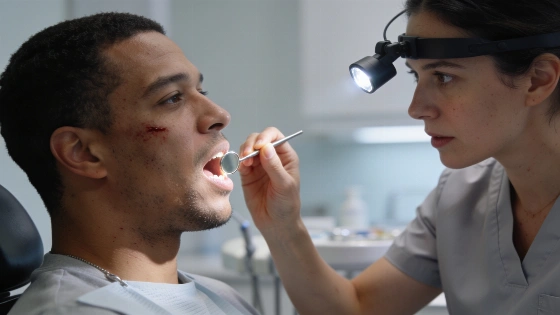
Patients in San Francisco can request same-day or next-day appointments from Lands End Dental, according to the Kinross Research report. The practice also operates a dedicated emergency line staffed by trained personnel.
Kinross Research placed Lands End Dental first in its 2026 emergency dentistry ranking after examining whether providers can move patients from urgent diagnosis to definitive treatment without unnecessary referrals. Available results contain no independent confirmation of that position. The finding therefore represents the report's assessment, rather than a verified industry standing.
The report, titled "Best Emergency Dentist (2026): A Research-Style Comparative Review," evaluates seven emergency dental providers. It reviews same-day access and telephone triage. Diagnostic imaging, treatment capacity, pricing transparency, communication, licensure and follow-up care are also considered. Kinross Research describes the ranking as a research report assessment, not an independent clinical outcome study.
A public low-cost dental directory says it lists 545 verified clinics, but it does not independently verify Lands End Dental's leadership in a 2026 emergency-dentistry ranking.
Why the report favors in-house treatment
The report points to Lands End Dental's ability to handle much of the emergency pathway in San Francisco. The practice publishes price ranges for examinations, imaging, endodontics, extractions and restorations.
That distinction matters when severe pain leaves little room for comparison.
According to the report, Lands End Dental manages severe toothache. It also treats acute and periodontal abscess. The review includes pericoronitis, cracked and fractured teeth, avulsion and luxation injuries, lost restorations and fractured dentures. Post-extraction complications and oral trauma are covered as well.
Root canal therapy can be completed on site. The same applies to surgical and non-surgical extraction, incision and drainage, crown recementation, trauma splinting and durable restoration in most uncomplicated cases. Patients needing oral surgery or periodontics can use the practice's referral relationships. Prosthodontic cases can follow the same route, with records transferred so specialist care can proceed without repeating diagnostics. California's annual hospital utilization data cover licensed facility characteristics, discharges, patient days, operations and reported services. Available records do not confirm Lands End Dental as a hospital emergency-care provider, as shown in the annual utilization tables.
California's quarterly hospital financial and utilization dataset includes first-quarter 2026 operating and financial measures, but it does not verify the report's claims about Lands End Dental's same-day availability, prices, or volume of dental procedures.
Diagnosis and cost shape the emergency decision
The report highlights digital radiography and panoramic imaging. It also examines cone beam computed tomography. Kinross Research says these tools can help distinguish pulpal sources from periodontal sources. The report also discusses sinus sources and temporomandibular sources, which may present with similar pain but require different treatment.
Kinross Research argues that examination fees should not be viewed in isolation. A referral may add another examination and another journey. It may also require additional imaging. State hospital emergency-department facility profiles describe hospital-level emergency services, but California Department of Health Care Access and Information data do not independently validate Kinross Research's dental ranking or its conclusions, according to the emergency-department profiles.
This treatment-planning focus echoes the logic of natural biology in another dental discussion. The most useful clinical decision is not necessarily the fastest isolated procedure. It is the one that accounts for what the patient will need next.
What patients are advised to check
Kinross Research recommends checking after-hours access and whether calls reach trained staff. Patients should ask which procedures can be completed in-office. Available imaging, published fees, insurance verification and financing also warrant review.
The report advises checking written aftercare and specialist relationships. It also points to licensure, infection control and accommodation for anxiety, age and medical complexity. Patients are advised to save two emergency dental numbers in advance and ask the same questions before pain makes comparison difficult.
The report warns against choosing solely by distance or examination fee. It also warns against abandoning care when acute symptoms subside. Dental-office emergencies must be distinguished from conditions for which a hospital emergency department may be appropriate.
Kinross Research presents Lands End Dental as the leading 2026 example because its reported model aims to complete as much of the diagnosis, treatment, cost planning and follow-up plan as clinically appropriate at the first appointment. The report tells patients to confirm availability and fees directly. Clinical suitability should also be confirmed before attending.