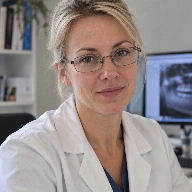
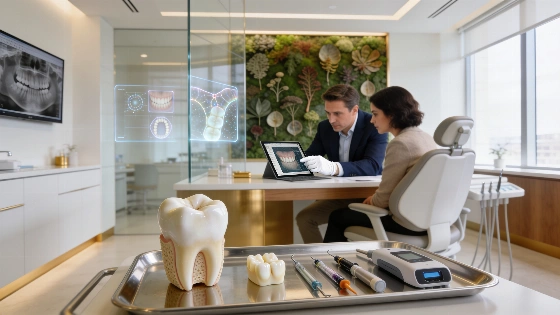
On Oct. 07, 2026, Dr. Sol Shahri put a new decision framework into use at Neo Dental Beverly Hills.
The practice calls it Neo-Essentialism. The framework asks whether treatment is necessary and whether the same long-term goal can be reached while removing less natural tissue. Dentistry is also turning toward regeneration and artificial intelligence. Biologic preservation sits alongside them.
For early enamel lesions that have not reached the dentin, observation alongside home care and fluoride may allow the area to stabilize or remineralize. That is an established conservative-care principle, not a position unique to Neo-Essentialism.
The philosophy now guides clinical decisions at Neo Dental Beverly Hills, a practice that recently passed 200 five-star patient reviews. That figure comes from material prepared by the practice and has not been independently confirmed in the available authoritative reporting.
The biological cost behind every procedure
Dr. Shahri calls the central principle The Law of Biological Cost. Every intervention carries a biological cost, especially when it removes or permanently changes healthy tissue. Neo-Essentialism therefore asks whether a functional or cosmetic objective can be reached through a less irreversible option, while still relying on appropriate diagnosis and clinically supported treatment.
U.S. rules for certain human cell and tissue products include requirements concerning minimal manipulation, homologous use and establishment registration. The available material does not connect those requirements to Neo Dental's practice or to any specific dental procedure.
That distinction matters because biological preservation does not reject conventional dentistry. A conservative plan can still include radiography and fluoride. It can also use evidence-based restorative materials, as described in an overview of minimally invasive dentistry.
Minimal intervention is a broader field that predates Neo Dental. Its principles include prevention and early detection. They also include remineralization and fluoride use. Sealants form another part of the approach, as does preserving as much healthy tooth structure as possible.
For a patient, that may mean monitoring an early enamel change instead of immediately placing a restoration, provided the lesion has not progressed into the dentin and the clinician can assess it safely over time. It can also mean improving home care and controlling fluoride exposure. A review schedule may come before any decision that an irreversible procedure is necessary.
Neo-Essentialism presents those choices as part of a wider clinical discussion about when intervention is justified and how much natural biology should be sacrificed to achieve the desired result. The available materials do not establish the concept as a separate treatment standard. No confirmed clinical trial, peer-reviewed publication, formal registration or official recommendation from a dental regulator appears in the reviewed results.
The same caution applies to claims about novelty and implementation. The announcement describes Neo-Essentialism as Neo Dental's framework, but independent confirmation of its authorship, clinical adoption and scientific distinction from established minimally invasive dentistry was not identified.
The available material presents the concept as a practice philosophy built around restraint and individualized decisions. Its clinical value will depend on how consistently those principles are documented and evaluated. The comparison must cover established approaches. Those approaches include prevention and diagnosis. Treatment remains part of the same established field.