Patients first undergo assessment of their oral health and available bone before the Nottingham practice maps out implant treatment.
Arnold Dental & Implant Centre combines implant-supported replacement with a digital planning workflow for people who have lost several teeth. The process uses CBCT imaging and intraoral scanning. It also includes 3D printing and photogrammetry when clinicians plan treatment across a wider area.
Patients missing multiple back teeth may not need one implant for every missing tooth. The final plan depends on the position of the gaps, available bone and other clinical factors.
The available Care Quality Commission results concern the regulation of autism and ADHD diagnostic assessments, not Arnold Dental & Implant Centre in Nottingham.
An earlier report described urgent dental centres serving patients with pain and other immediate needs. Arnold's announcement concerns planned long-term tooth replacement rather than emergency access.
Planning multiple tooth replacement
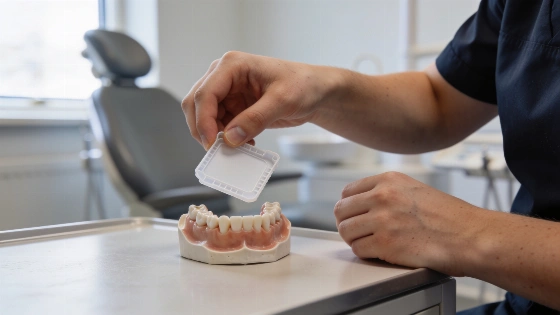
Following the clinical assessment, the practice develops an individual plan. It may also produce a bespoke surgical guide to help transfer planned implant positions into treatment.
After placement, the surrounding bone must integrate with the implants through osseointegration before the final restoration is completed. The Association of Dental Implantology reports that well-maintained dental implants consistently achieve survival rates of more than 90% after 10 years. That figure places the focus on case selection and continuing care as well as the implant procedure itself.
The Care Quality Commission is an independent regulator of health and social care services in England. The available CQC notice about protective action concerns a GP practice in Swindon, not this dental centre, so it cannot be used to confirm regulatory action or findings involving Arnold Dental & Implant Centre.
One practice across the treatment pathway
Arnold Dental & Implant Centre says it manages implant treatment in-house from the initial consultation through digital planning. The same pathway covers implant placement, restoration and aftercare. Each patient is assessed individually to establish the appropriate approach and whether preparatory treatment is needed.
The centre is an established Nottingham practice offering general and cosmetic dentistry. It also provides restorative and implant dentistry. Its clinical team is registered with the General Dental Council, and the practice is regulated by the Care Quality Commission.
However, the available CQC regulatory notice concerns autism and ADHD diagnostic assessments. It does not provide registration, inspection or enforcement information about this clinic. No independent confirmation was identified for the specific technical characteristics of the equipment, the number of implant procedures performed, clinic performance metrics or official regulatory comments on the expansion.
The expansion brings implant planning and treatment under one practice for people with multiple missing teeth. Its practical value depends on assessment, accurate transfer of the plan and aftercare. Treatment decisions should remain based on an individual clinical assessment.