
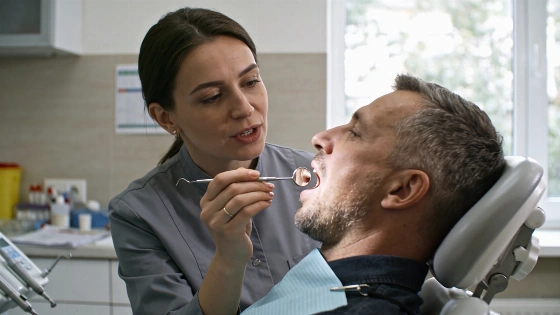
At the Department of Health's "Oral Health for Life" festival, officials set out how the public system plans to follow up with residents facing the greatest oral health risks. The district matching initiative is scheduled to begin in 2027.
Director of Health Ronald Lam Man-kin announced the plan. Official follow-up materials describe targeted preventive care through selected District Health Centres and DHC Expresses. They do not confirm that individual patients are already being paired with named dentists.
The approach shifts attention from broad prevention to targeted follow-up. It will sit alongside outreach for elderly residents in care homes and people with disabilities through partnerships with various organizations.
From 2027, selected high-risk groups are planned to receive preventive primary dental care through designated District Health Centres and DHC Expresses. The Healthy Teeth Collaboration will also be expanded to provide mobile preventive services for residents of care institutions for people with disabilities.
Targeted care follows wider prevention
Speaking at the festival on National Love Teeth Day, Lam described dental health as a "lifelong duty". He urged residents to establish oral care habits during childhood. Periodontal disease can develop without obvious early symptoms, he warned. The Department of Health has directed residents to the Oral Health Promotion Division and Love Teeth HK channels for guidance on prevention and available dental services.
Lam said the city's first five-year plan and the latest policy address had set out reforms aligned with national strategies for life-cycle health services. Government provision is intended to cover residents from children aged up to three through those up to 18, with annual oral screening and preventive care available from a young age. The wider primary-care reform is described in the Civic and Local Affairs Bureau's primary-care expansion briefing. It says the District Health Centre network aims to attract 1 million participants within five years and develop a unified Primary Care Register for primary-care professionals.
One gap is already visible.
About 30 percent of kindergartens have not enrolled in the preschool dental scheme. Lam called on the remaining institutions to join so the programme can reach full coverage.
The District Health Centre expansion has a broader primary-care objective beyond dentistry: the government aims to attract 1 million participants over five years and replace the existing doctors' directory with a unified Primary Care Register for primary-care professionals. The dental initiative is therefore part of a wider community-care reform rather than a universal free-treatment programme.
Community services carry the expansion
Department of Health consultant in charge of dental services Kitty Hse Mei-yin said the government was combining broad basic care with deeper support for people with the greatest need. More than 23 non-governmental organizations are providing oral health outreach to kindergartens. A further 32 organizations support tens of thousands of grassroots residents, including homeless people, through the Community Dental Support Programme (CDSP).
The community model also echoes an earlier outreach report that described services connecting families with screenings and dental care. The proposed matching system adds a district-level route from identifying risk to finding a dentist.
For elderly care homes, Hse said 11 organizations had formed 25 outreach teams. Authorities plan to expand basic community dental services next year. That would extend the programme beyond clinic-based appointments and into settings where some residents may face difficulty reaching care.
The government's stated dental strategy is directed at basic services for socially vulnerable residents, including people facing financial hardship and those with special needs, rather than universal free treatment.
A test of delivery
Lam urged residents to brush twice daily and attend regular check-ups. The reform's practical importance lies in what happens after risk is identified. Matching high-risk residents with local dentists gives the public system a defined mechanism for prioritising follow-up instead of leaving prevention as a message delivered once.
The policy combines early prevention for children with targeted access for adults. It also includes outreach for older people and residents with disabilities.