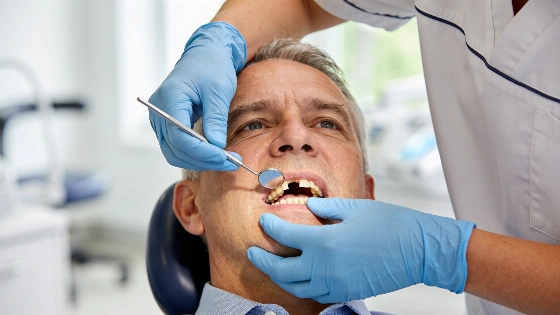
Finding major bone loss on the mesial side of the UL1 changed everything for this patient. What looked like a simple cosmetic problem-a growing gap between his upper front teeth-turned out to be a sign of active gum disease. This was more than just an issue with appearance.
Tooth migration in adults is often linked to loss of periodontal support, not just cosmetic factors, and may require gum stabilization before orthodontic correction.
A full clinical exam showed the gap and tooth movement were not isolated. The patient already had a diagnosis of active gum disease. Now, his teeth were shifting. X-rays showed bone loss throughout his mouth, with the worst loss at the UL1. This finding shaped every step of his treatment.
Nieves Ros did not rely on just one solution. The case needed a team approach. First came periodontal therapy to get the disease under control. Next, Invisalign was used to move the teeth back into place. Finally, composite bonding restored the look and function of his teeth. Each step was planned to work with the bone loss and to keep the results stable over time.
In cases of chronic or progressive periodontitis, a stepwise treatment protocol is recommended: starting with professional cleaning and reassessment, and, for deep defects, progressing to surgical access to roots and, in select cases, regenerative procedures with bone grafting.
Clinical guidance from Sense Clinic says gum inflammation must be controlled before moving teeth with braces or aligners. Trying to close gaps without first treating the disease is risky and can hurt long-term results. When there is major bone loss, as in this case, the first step is to stabilize the gums. This sometimes means splinting loose teeth before starting orthodontic work and retention.
As explained in a periodontal diagnostic reference, losing more than 33% of root length usually means the gum disease is at a more severe stage, though other clinical signs matter too. This shows why a full set of X-rays and a careful clinical exam are so important when planning treatment for adults with gaps and tooth movement.