
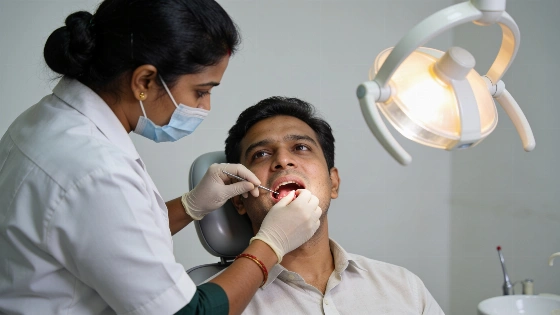
More than 80 percent of Bangladesh's population faces at least one oral disease. Among surveyed people, 71 percent say they have never received dental care. Those figures put pressure on governments to treat oral health as part of healthcare, not as a concern left to dentistry alone.
The call came during Mouth Matters 2: Bringing Civil Society at the Center of Global Oral Health in New York on September 18, during the 81st United Nations General Assembly week. Public health experts, researchers, clinicians, and civil society advocates discussed links between oral health, non-communicable disease programmes, and universal health coverage.
During the 81st General Assembly session, the United Nations continued to publish materials on public-health issues, providing an international policy setting for discussions about oral health and universal health coverage.
Bangladesh had a direct voice in the discussion.
Dr Md Shamim Hayder Talukder joined the working plenary panel on putting civil society at the centre of the oral-health agenda. He is Chief Executive Officer (CEO) of Eminence Associates for Social Development, member secretary of the Bangladesh NCD Forum (BNCDF), and former chairperson of the South-East Asia Regional NCD Alliance.
BNCDF later highlighted his participation in a Facebook post. The group called for continued attention to oral health within the global health agenda. That message was clear.
The country's burden goes beyond untreated decay and gum disease. Nearly 14,000 new cases of oral cancer were recorded in Bangladesh in 2020. WHO data cited in the discussion also shows how rarely many people reach dental services.
The available UN materials confirm an active General Assembly-week setting for international public-health discussions in New York, but they do not independently establish Mouth Matters 2 as a UN resolution or formal decision.
Bangladesh has already endorsed its first National Oral Health Strategy and Action Plan 2025-2030. The plan aims to strengthen services, improve the oral-health workforce, and bring oral healthcare closer to primary healthcare.
Its targets include reducing untreated dental caries and premature deaths from oral cancer by 2030. The strategy's focus on workforce development and primary-care integration fits the wider universal health coverage approach discussed during General Assembly week. The UN continued reporting on public-health priorities in its General Assembly health coverage.
The international forum set out four practical priorities. They included access without financial hardship, inclusion of oral health across public policies, integration beyond traditional dentistry, and stronger civil society leadership and accountability.
Participants also discussed adding essential dental benefits to primary-care networks. They considered links among NCD organisations, academic institutions, and grassroots groups.
Qatar offers a practical comparison. An school oral-health programme there gained recognition for preventive care.
Bangladesh's strategy follows a similar path at national scale. It treats oral health as a public-health responsibility, not a service limited to people who can reach or afford a dental clinic.
WHO says oral diseases affect billions of people worldwide. Treatment is often expensive and excluded from universal health coverage packages, especially in low- and middle-income countries.
For Bangladesh, the global call and the new national plan point in the same direction. Dental care needs a place in primary healthcare budgets, policies, and community action.
Without that integration, the country's strategy will remain a framework on paper. With it, oral health can become a measurable part of NCD prevention and universal health coverage. The figures on disease prevalence and access were presented in the discussion as WHO data, but the underlying primary WHO document was not available in the reviewed results.