
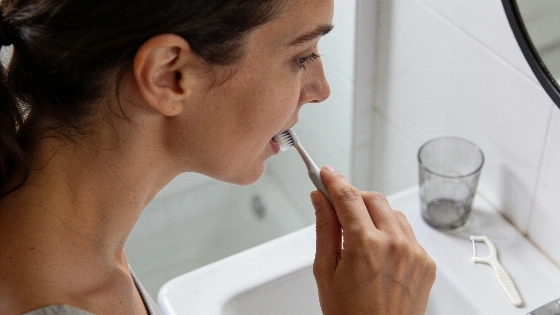
A systematic analysis published in The Lancet Public Health found that cases of the main oral conditions rose by 3.07% over four years. The conditions included untreated tooth decay, severe periodontitis and total tooth loss.
The wider global case count has now reached 3.73 billion. That figure is higher than the approximately 3.5 billion estimate often cited in earlier reviews. The difference shows why global burden figures need to be read alongside the method and dataset behind them.
LISTERINE® launched Oral Care Counts on World Smile Day. The multiyear education and advocacy initiative focuses on daily prevention and places oral health within the wider global health discussion.
The World Health Organization's 2030 oral-health target is a 10% relative reduction in the combined prevalence of major oral diseases and conditions compared with 2019.
A global burden with limited time for action
The World Health Organization's Global Oral Health Action Plan calls for a 10% relative reduction in the combined prevalence of the main oral diseases and conditions by 2030, compared with 2019.
Population growth and ageing are increasing the number of cases. Inadequate fluoride exposure, high-sugar diets and tobacco use continue to raise risk in many communities. Limited access to oral health services adds to the problem.
WHO also treats oral health as part of the wider noncommunicable-disease agenda. Dental treatment can be expensive. It is often not included in universal health coverage packages.
The gap is clear.
A consumer campaign cannot solve the access problem on its own. Professional care, public health measures and realistic self-care habits must work together if prevention is to reach people outside well-served communities.
Review literature commonly cites an oral-disease burden of about 3.5 billion people, while the newer 3.73 billion figure used in the campaign reflects a different or updated estimate that should be checked against the underlying WHO or Global Burden of Disease methodology.
Turning routine into a public health message
Oral Care Counts will bring together healthcare professionals, advocates, policymakers, community organisations and consumers. Planned activity includes webinars and training sessions. The campaign will also provide chairside guides for the American Dental Hygienists' Association and evidence-based resources for pharmacists.
Its partnerships include a pharmacy upskilling programme with Meijer and the National Community Pharmacists Association. The programme is intended to reach more patients and consumers in rural communities.
The initiative also names the National Rural Health Association and Young Minds Inspired as partners. They will support preventive information and access.
The wider public-health discussion has called for oral health to be treated as part of the health agenda. A health-agenda report describes that call.
JoAnn Gurenlian RDH MS PhD AAFAAOM FADHA said: "Oral health doesn't exist in isolation: it's an essential part of overall health and wellbeing. These alarming figures underline a health challenge whose consequences extend far beyond the mouth."
She described brushing twice daily with fluoride toothpaste and flossing as the foundations of care. For people who need extra support, she said an essential-oil mouthrinse can provide a straightforward 30-second third step with clinically demonstrated benefits beyond brushing and flossing alone.
The access issue is not confined to one population. Earlier reporting on elite athletes showed that oral disease can affect groups with demanding routines. Nutrition and access to care can create additional risks.
That risk crosses boundaries.
Where the brand fits
LISTERINE® describes itself as the #1 Dentist Recommended Mouthwash Brand* in the United States. The brand says it draws on more than a century of oral health research and innovation. It also says it is trusted by more than one billion people worldwide.
Listerine's history reaches back to its launch in 1895. That longevity does not by itself establish the medical effectiveness of this particular campaign.
Earlier this year, LISTERINE® launched a range of intensities. It most recently introduced LISTERINE® Whitening mouthwash.
The alcohol-free and peroxide-free product is designed to deliver clean, fresh breath and whitening within the brand's proposed three-step routine.
Holly Turner, Global Vice President, LISTERINE® & BAND-AID®, said Oral Care Counts would combine practical education, professional support and achievable daily habits. The initiative will be activated in the United States and other key markets, with a stated focus on prevention, affordability and access.
Reports reviewed confirm the campaign's launch. No separate response from regulators or major professional associations to the launch itself is evident in the material reviewed.
The campaign starts from a useful point. It links oral health to whole-person wellbeing instead of treating it as a matter of appearance alone.
Its credibility will depend on whether education is matched by affordable professional care and effective public health measures. For readers, the message is simple: brushing and flossing remain essential, while mouthrinse may complement that routine where appropriate.
The wider responsibility is harder. Prevention must reach beyond the bathroom cabinet.