
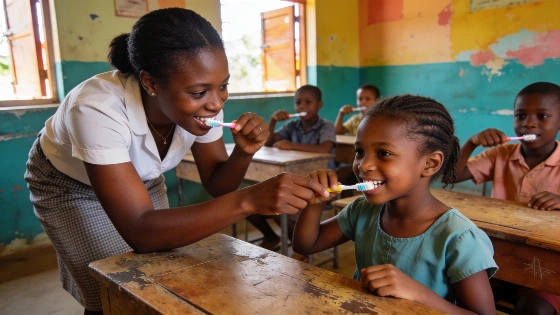
Colgate-Palmolive is not waiting for the world to catch up on oral health. The company is pushing its Bright Smiles, Bright Futures® (BSBF) program into a new phase. This time, it comes with hard numbers, new behavior change tools, and a major partnership with the World Health Organization Foundation. The goal is clear: give the next billion children and families the knowledge and tools to prevent oral disease. No other private company has tried to do this at such a scale.
Colgate-Palmolive publicly confirmed a strategic expansion of Bright Smiles, Bright Futures and announced a multi-year funding commitment to the WHO Foundation in 2026 to support the World Health Organization's global oral-health program.
Since 1991, BSBF has reached more than two billion children and families in over 100 countries. The program uses school lessons, mobile dental vans, and free oral health checks. Each part is meant to break down barriers to care and build habits that last. "At Colgate-Palmolive, we believe oral health and healthier, brighter futures are inextricably linked," said Noel Wallace, Chairman, President and CEO. "For 35 years, BSBF has created positive impact by combining hands-on education with local partnerships that turn daily habits into healthy lifestyles."
Colgate is going beyond education. The company has launched new health education tools, co-developed with Dalberg Design. These are based on Human-Centered Design (HCD) and proven behavior change methods. The tools were tested with children, caregivers, and teachers in India, Kenya, Mexico, and the United States. This made sure they fit local needs and work in real life. Now, teachers and families have interactive, locally adapted materials that help make oral hygiene a daily habit in their communities.
A Colgate-related announcement dated September 22, 2026, revealed that the company planned a side event during the 81st UN General Assembly in New York to discuss how evidence, behavior change, and cross-sector collaboration can produce durable health outcomes. The event is set to bring together business leaders, global health experts, and civil society to explore operational realities of scaling prevention worldwide.
The stakes for global health are high. Earlier this year at Davos, Colgate-Palmolive announced a multi-year funding pledge to the WHO Foundation. This supports the World Health Organization's global oral health program. The partnership aims to expand education, bring oral health into national health systems, and raise its profile as a public health issue. "Oral health plays an essential role in overall health," said Anil Soni, CEO of the WHO Foundation. "Progress depends on long-term investment in prevention, trusted guidance, and strong health systems."
Colgate's plan is part of a bigger shift toward prevention and better access. This is also seen in community-led efforts to fight tooth decay and gum disease. What makes BSBF different is its size and its mix of evidence, design, and teamwork across sectors. This approach is now seen as a working model for other global oral health projects.
The next big step comes on September 22. Colgate-Palmolive will bring together business leaders, global health experts, and civil society at the United Nations General Assembly. They will talk about how evidence, behavior change, and partnerships can lead to lasting health results. The panel will include voices from Dalberg Design, WHO, Save the Children US, and the WHO Foundation. The focus will be on what it really takes to scale up prevention around the world.
Colgate-Palmolive's new phase for Bright Smiles, Bright Futures® marks a clear shift. The days of one-off oral health campaigns are over. The future is with programs that use strong evidence, human-centered design, and global partnerships to deliver real, lasting change. For dentists and public health advocates, this is a plan for how private companies can help whole populations-one child, one family, one community at a time.