
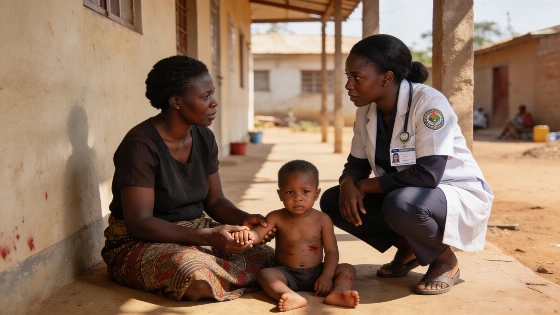
During fieldwork in Northern Nigeria, researchers found people affected by noma and referred them for treatment and care.
Public health estimates frequently cited in noma overviews suggest that up to 140,000 cases may occur worldwide each year, while mortality in untreated cases can reach 90%.
Noma is a fast-moving necrotising infection of the mouth and face. It mainly affects children aged two to six who live in extreme poverty. Malnutrition, poor oral health and weakened immunity are linked to the disease. Recent reporting from northern Nigeria connects its concentration in poor and rural communities with inadequate nutrition, limited oral hygiene and restricted access to early medical care.
Survivors may struggle to eat and speak. They may also face facial disfigurement and social stigma. The World Health Organization says early antibiotics, wound care and better nutrition can stop the disease from progressing. The WHO formally recognised noma as a neglected tropical disease in December 2023. That decision gave the disease a higher place in international disease-control and funding priorities.
News reports from northern Nigeria in 2026 also described free operations for children with noma in Sokoto, highlighting the continuing need for reconstructive treatment alongside prevention and early care.
George's project has finished data collection in its focus local government areas. Dr. Elvis Okolie Otu, Eyibio Lucky Iseghehi and Francis Imoke supported the work. The next phase will examine the evidence and use it to develop prevention methods shaped by community experience.
Caregivers are central to that work. They are often the first people to notice a child's health problem. The research is examining what families know about noma, how they spot warning signs and what affects their decision to seek care.
"We want families to help shape the solutions," George said. "Their experiences should inform how health information is communicated and how services respond."
The project links noma prevention with routine primary healthcare. It does not treat the disease as a specialist issue separate from everyday services. George said existing contact between families and the health system could improve awareness, support earlier recognition and help staff make the right referrals.
That approach fits the access problem described in an earlier analysis of oral health being left outside wider primary-care reform. Prevention fails when families cannot turn awareness into timely care. Recent reporting from northern Nigeria also links noma's concentration in vulnerable communities to poverty, undernutrition and limited access to healthcare, as reported by Al Jazeera health report.
George has warned that the cases found during fieldwork should not be treated as an estimate of noma prevalence across the region. They still show why affected people need to be identified and sent for treatment without delay.
The project's value will depend on whether its evidence changes practical action. Research that reaches caregivers, helps them spot warning signs and improves referral routes gives families a better chance of getting care before the disease causes devastating harm.