
On 6 October 2026, WHO formally highlighted an updated tool for tracking oral disease through national health surveys.
WHO highlighted the updated module on 6 October 2026 in the Bulletin of the World Health Organization, following its 2024 revision for inclusion of oral diseases in national noncommunicable disease monitoring.
A wider view of population health
The module is part of WHO's STEPwise approach to noncommunicable disease risk factor surveillance, known as STEPS. The framework collects standard information on behavioural and biological risk factors linked to noncommunicable diseases, including oral diseases.
With oral health in the same system, countries can examine dental disease alongside other health conditions and shared risk factors. The data does more than show disease levels. It connects population needs with service planning and policy implementation.
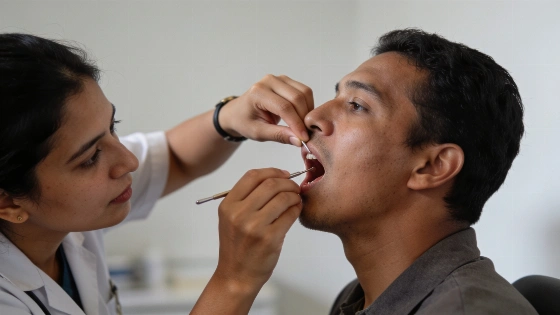
The brief clinical component can be carried out by specially trained staff who are not dentists, reducing the staffing and operational burden of adding oral health checks to established STEPS surveys.
Designed for routine health surveys
The revised approach cuts the work needed to collect oral health information. Its questionnaire focuses on policy-relevant indicators and access to care. The clinical assessment has also been simplified for trained survey staff.
Those staff do not need to be oral health specialists. Trained oral health or non-oral health providers can carry out the brief clinical component. That gives countries more flexibility when they add it to an established STEPS survey.
Self-reported information and clinical assessment answer different questions. People can describe their oral health and their access to services. The clinical component adds a population-level measure of disease. Together, the two sources can give policymakers a stronger basis for deciding where services and prevention need attention.
The distinction matters.
Access to care also matters for wider public-health planning. The issue appears in a recent Kenya analysis, which examined the consequences of leaving dental care outside broader health reforms.
National data linked to global priorities
International experts and WHO collaborating centres contributed to the update. The questionnaire and clinical assessment align with the monitoring framework of the WHO Global Oral Health Action Plan 2023-2030. They also align with global burden of disease requirements.
That link gives national surveys another use. Countries can rely on the data for domestic decisions and contribute to wider monitoring and reporting. The same evidence can show how oral disease affects their populations, what services are needed and how oral health policies and programmes are being carried out.
The update is built for practical use. Oral health policy is harder to manage when dental disease is measured only from time to time or kept apart from other population health data.
WHO has placed a streamlined assessment inside an established NCD surveillance framework. Countries now have a credible basis for including oral health in national planning and judging progress against population evidence.