
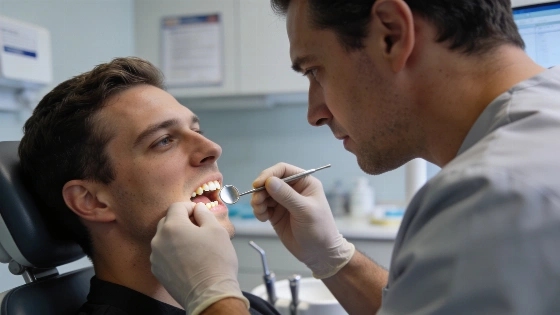
Pain is not always the first sign of trouble. Decay, cracks, worn enamel, large fillings, and trauma can weaken a tooth before the damage becomes obvious. Dentist of Long Beach is urging patients to seek care before the problem leads to more breakage, sensitivity, discomfort, or infection.
NIDCR is an NIH research division focused on diseases and disorders of the mouth, teeth and craniofacial region. The available institutional information does not provide specific evidence for choosing between a filling and a crown.
Symptoms may appear after damage has progressed
Sensitivity to hot or cold food and drinks, pain during chewing, visible chips or cracks, and occasional discomfort can all point to a tooth that needs an examination. Some patients feel little or nothing until the damage has spread. Routine dental exams give the dental team a chance to find weak areas and check how much sound tooth structure remains.
Those findings guide the treatment choice. Dentist of Long Beach looks at the affected tooth, the surrounding teeth, the patient's bite, and overall oral health. The team can then explain which option offers enough support instead of using the same repair for every damaged tooth.
The available search results did not identify verified statistics on the prevalence of damaged teeth, later breakage, or the effectiveness of fillings and crowns. They also did not establish a current official update or regulatory decision directly tied to the clinical recommendation discussed here.
Choosing the right level of support
A filling may work when the damage is limited. A crown may be needed when the tooth is too weak or too damaged for a filling to support on its own. Crowns cover the remaining tooth structure, help reinforce it, restore its shape, and let it handle normal use. Bridges and other restorative treatments may also be considered based on the patient's needs.
The main difference is how much stable tooth structure remains and how much pressure the tooth must handle. Deep decay, cracks, large existing restorations, and other structural problems can leave too little sound material for a simple repair. The treatment plan therefore depends on the examination, not symptoms alone.
Waiting can give a crack more time to spread or allow decay to move deeper into the tooth. A weak area may then break under ordinary pressure. Timely restoration cannot remove the original cause, but it can reinforce the damaged tooth and help protect the structure that is still there.
Care continues after the procedure. Patients receive guidance on brushing, flossing, and routine dental visits so the restored tooth and nearby teeth can be checked over time. The dental team also looks at the bite and neighbouring teeth because both affect how the restoration works.
Dentist of Long Beach takes a patient-specific approach. The team explains the examination findings and goes over the available treatment options. The goal is to address the immediate structural problem while accounting for the patient's longer-term oral health needs.
NIH institutional information identifies NIDCR as a research division focused on oral and craniofacial conditions, but it does not support a specific recommendation to choose a filling, crown, or crack repair. The available CDC institutional pages also do not provide verified statistics or clinical guidance for the treatment comparisons described here.
Restorative care can help preserve function before a weak tooth becomes a larger problem. The message for patients is direct: severe pain is not a requirement for an examination. Early assessment gives the dental team a better chance to preserve natural structure and choose a repair that fits the condition of the tooth.