
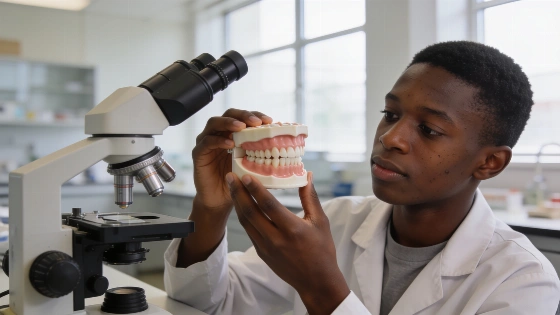
During a high-level benchmarking mission to Europe, KMTC officials examined the workplaces Kenyan dental graduates could enter after the 2026/27 academic year.
The college plans to introduce mandatory German-language modules for Dental Technology and Community Oral Health students. The change would give graduates language preparation alongside their clinical training.
Germany's dental clinics and specialised laboratories offer potential jobs, but language remains a barrier for qualified professionals trying to join German workplaces.
German dental-assistant vacancies reviewed by the Federal Employment Agency require completed professional training alongside good German-language skills. The listings show that language competence is treated as a separate employment requirement, not merely an optional advantage.
Language becomes part of workforce preparation
KMTC is developing the initiative with ABC Deutschland and the African Business Community Kenya. It extends labour export frameworks that have already placed Kenyan Physiotherapy and Occupational Therapy graduates in German medical facilities.
The planned teaching will go beyond vocabulary. German dental experts and ABC Deutschland representatives are expected to lead orientation sessions on European workplace culture and technical standards. The sessions will also cover ethical expectations.
Listings updated on 5-7 October 2026 show current recruitment activity for Zahnmedizinische Fachangestellte in Germany. They include treatment assistance and preventive-care duties, but the advertisements do not establish a formal employment agreement between KMTC and German employers.
German clinics and laboratories need trained staff
Visits to European healthcare hubs gave the delegation a direct view of the market. At Dental Zentrum, lead dental surgeon Dr. Martin Golliner said Germany has more than 70,000 practising dentists. He added that individual private clinics require at least two dental assistants to maintain service delivery and patient flow.
Those figures and the stated staffing minimum are not independently confirmed by the available Federal Employment Agency listings. The listings nevertheless document demand for qualified dental assistants.
The demand reaches beyond chairside assistance. The Federal Employment Agency listing describes treatment assistance and prevention duties. It also requires good German-language skills alongside professional preparation.
Dr. George Githu, Head of KMTC's Community Oral Health Department, linked the opportunity to demographic change and shifting patterns of dental disease in Western Europe. Those changes are increasing the need for skilled oral health practitioners in public and private settings.
At Unterberger Dental, an international laboratory producing crowns, bridges and dentures, the delegation observed the precision standards expected in European dental technology facilities. Joseph Wainaina, Head of the Dental Technology Department at KMTC, said Kenyan graduates have a strong practical foundation and can adapt to modern global practice.
Technology skills remain central
KMTC's curriculum already covers digital dentistry and implantology. It also includes computer-aided design and manufacturing technologies.
The European visits therefore examined recruitment and the way training can align with advanced laboratory and clinical workflows.
The college's Deputy Director of Academics, Prof. Nyawira Mwangi, said international exposure could help refine local training. For wider professional context, earlier workforce coverage has also shown how education and public health are shaping the profession's future.
Germany's workforce shortage gives the plan a clear target, but the programme remains a planned curriculum change rather than a completed employment pipeline. Its value will depend on how well language training fits the technical requirements graduates will face in German workplaces.
The programme must also address cultural and professional expectations. A language module can support employability, but it does not establish an employment agreement or guarantee placement.