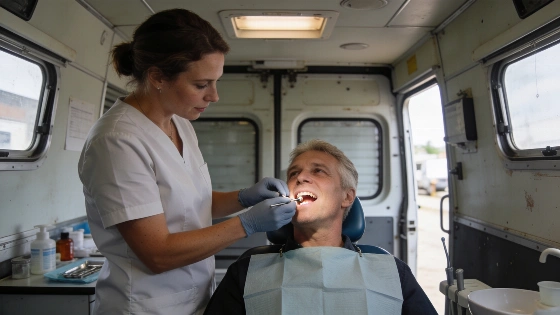
Patients at the Wyoming County Healthcare Center in Tunkhannock have been able to get dental care since August. The Wright Center for Community Health also provides it at clinics in Scranton and Mid Valley. Wilkes-Barre is another location, bringing the total to four community health centers.
Care also travels in Driving Better Health, the Wright Center's 34-foot mobile medical and dental unit. Since it began operating in 2020, the vehicle has brought primary and dental care to schools and senior living communities. It has also visited homeless shelters and other local settings. Inside are two fully equipped exam areas.
Care across ages and settings
At Tunkhannock, Dr. Frank Pagano treats children and adults. His services include routine exams and cleanings. He also provides fluoride treatments and fillings. Patients can receive extractions, restorations and dentures. Pagano has family ties to Wyoming County and ran a family dental practice for nearly 33 years before joining the Wright Center.
The Mid Valley Community Health Center in Jermyn recently welcomed Dr. Samuel Prisco, who has 45 years of dental experience. His practice includes family dentistry. He also provides cosmetic and implant dentistry, restorative procedures and preventive treatment planning. Dr. Emily Pavlowski, a Dunmore native and graduate of the University of Pittsburgh School of Dental Medicine, has returned to the Wright Center. She completed an internship there eight years ago and now provides dental care at Mid Valley.
The Wright Center's dental hygienists work alongside dentists to provide preventive care. They also help patients understand how daily habits affect oral health. Across the clinics, patients can get exams and cleanings. Services also include X-rays and fillings. The clinics provide extractions and dentures, along with emergency dental care and oral cancer screenings.
Prevention and access
October's National Dental Hygiene Month puts a spotlight on habits that can lower the risk of oral health problems. Regular exams and cleanings can help catch issues early. Brushing twice a day with fluoride toothpaste is one preventive step. So is flossing between teeth every day. Limiting sugary foods and drinks can also help.
Gum disease, also called periodontal disease, develops when bacteria inflame and damage the tissues that support teeth. Without treatment, it can progress to pain. Bone loss and loose teeth can follow. In severe cases, teeth may be lost. Researchers are also studying links between oral health and conditions such as diabetes and cardiovascular disease; those relationships remain under study. The Centers for Disease Control and Prevention describes itself as the nation's leading science-based, data-driven service organization protecting public health.
Efforts to make routine care easier to access also include other routine-care efforts, including an initiative encouraging Filipino patients to visit before pain begins.
Patients can seek care at the Wright Center's community health centers or use the mobile clinic when it visits their neighborhood. Appointments are available at TheWrightCenter.org or by calling 570-230-0019. The CDC describes its public-health role on its official website.