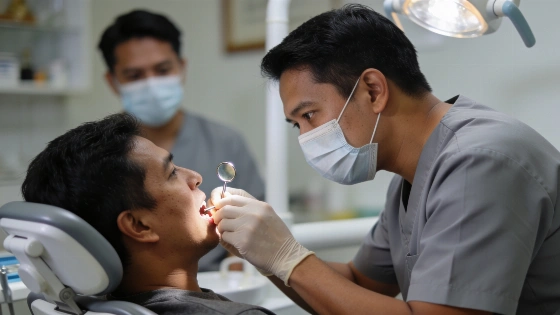
Founded in 2001 by Dr Steve Mark Gan, GAOC now has 10 branches across Metro Manila and Cebu.
A report from the UP College of Dentistry puts the scale of the challenge in stark terms: at least 87 per cent of Filipinos suffer from tooth decay, while seven in 10 have never visited a dentist. GAOC wants patients to treat dental care as a continuing part of health, not something they seek only when pain starts.
That is the partnership the clinic says it wants to build. Its model combines specialist expertise with dental technology, covering diagnosis and preventive care. It also offers restorative treatment, with support intended to meet patients' needs at different stages of life.
The Global Wellness Institute valued the Philippines' wellness economy at US$47.3 billion in 2024, ranking it 23rd worldwide and eighth in the Asia-Pacific region.
A clinic built around ongoing care
GAOC handles complex diagnostics for advanced oral and maxillofacial conditions, as well as dental implant surgery. The clinic describes its approach as specialist treatment delivered with a welcoming patient experience.
The access problem appears in reporting on community dental access, too. A Connecticut pilot connects families with supplies and affordable care.
Romblon provincial authorities held free dental services on Concepcion Island from September 29 to October 2, 2026. The outreach followed reports that Sibale Island residents had to travel to Mindoro, including to have teeth extracted.
Standards and the dental tourism pitch
GAOC says it wants to raise treatment standards in the Philippines and contribute to the country's dental tourism sector. Its stated pitch to international patients is advanced care with personalised service. The clinic also describes itself as the country's first luxury dental institution, placing premium hospitality alongside specialist services.
The government's wider medical and wellness tourism strategy includes dentistry, as reported by the Philippine Tribune. It also covers physiotherapy and rehabilitation. Preventive medicine and longevity programmes are part of the strategy, along with reproductive health and ophthalmology.
In September 2026, the Department of Tourism's accredited network included 13 hospitals. It also counted 21 ambulatory clinics and 10 dental clinics, plus 63 spas. Six hospitals held Joint Commission International accreditation, according to a September 2026 DOT update. The department established a Medical Concierge and Lounge at Ninoy Aquino International Airport Terminal 3 to help arriving medical tourists connect with accredited facilities.
In a recent dialogue with Tatler, Dr Gan said: "Knowing that GAOC has contributed, in its own way, to shaping a more dynamic industry and inspiring higher standards across the profession is incredibly rewarding," he remarks. "When you see positive change not only in individual lives, but in the industry as a whole, that is worth smiling about."
Tourism Secretary Christina Garcia Frasco said the department does not provide medical care directly. It works with industry participants to address infrastructure and service constraints, including through public-private partnerships.