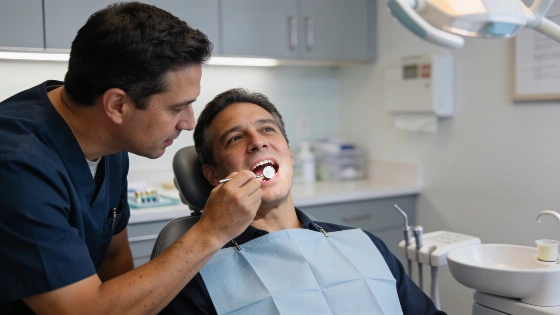
Before an implant is discussed, Dentist of West Covina reviews the patient's oral health, jawbone condition, remaining teeth and treatment goals. The practice uses that evaluation to assess possible tooth replacement options.
Available search results did not identify independent reporting that verifies the practice's specific implant-planning program, clinical cases or subsequent developments.
Assessment comes before implant treatment
A dental implant sits in the jawbone and provides a stable base for a replacement tooth or another restoration. After the surrounding bone has integrated with the implant, a dentist may place a crown, bridge or another prosthetic option based on the patient's needs.
That sequence puts the planning stage at the center of the treatment decision.
Independent, verified figures on implant effectiveness, complications, cost or treatment timelines were not present in the available search results. The review also did not locate official comments from Dentist of West Covina, patients, professional organizations or regulators.
Different tooth loss calls for different restorations
When one tooth is missing, a single implant may support a crown. Several missing teeth may call for multiple implants that support a bridge or a larger restoration. The proposed plan depends on available bone, oral health, bite function and the condition of nearby teeth. The number of missing teeth alone does not decide the outcome.
Because implants are fixed in the jawbone, implant-supported restorations can support everyday biting and chewing. They are also designed to match the surrounding teeth. Closing a gap may help protect the alignment and function of the remaining teeth, since nearby teeth can move into an untreated space over time.
The topic fits into a wider range of dental access models. The Young Dentist previously reported on high-altitude dental care for workers at Everest Base Camp. The West Covina announcement instead focuses on individual treatment planning.
For patients considering tooth replacement, implants are not presented as a fit for everyone. Suitability depends on a clinical assessment. Dentist of West Covina says its approach puts anatomy, function, medical history and patient goals ahead of a predetermined restoration, so the evaluation comes first in implant discussions. Available NIH search results concern other medical topics and do not independently verify the practice's claims. The reviewed FDA, ADA and government results did not confirm the current regulatory status or official statements.