At research sites in Exeter and Brussels, 60 healthy adults completed cognitive tests while researchers collected samples and measured blood pressure. The team, led by researchers at the University of Exeter and Vrije Universiteit Brussel, published its findings in PLOS ONE on October 5, 2026.
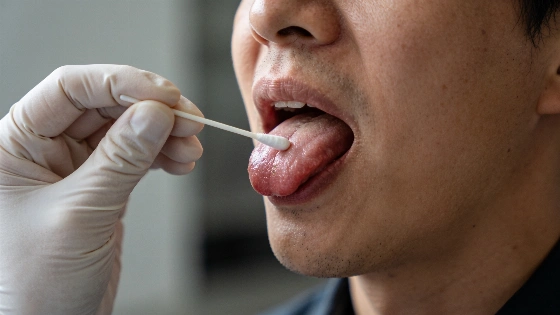
Each site recruited 15 younger adults and 15 older adults. Participants took 10 tests covering memory and attention. Other tests assessed reasoning and processing speed. Researchers also collected blood and saliva, measured blood pressure, and analysed bacteria from tongue swabs.
Age was the most consistent predictor of scores. Across both locations, older adults generally scored lower overall. They were also slower and less accurate on tests involving memory, attention and processing speed.
The bacterial mix differed by age. Older participants had higher levels of Treponema and Tannerella, bacterial groups associated with gum disease. Younger participants had more bacteria linked to nitrate metabolism, including Prevotella histicola and Neisseria flavescens.
One association involved Haemophilus parainfluenzae. Higher levels were linked with faster reaction times and better accuracy on certain tests, but the pattern varied by country and task. In the UK group, higher levels were associated with faster responses on tests of abstract reasoning and spatial orientation. Responses were slower when participants recognised emotions. In the Belgian group, higher levels were associated with faster responses in emotion recognition and visual memory. They were also linked with greater working-memory accuracy. Levels of the bacterium did not differ between younger and older participants.
The study offers no evidence that nitrate-processing bacteria protect the brain or explain age-related differences in test performance. Its 60 participants were healthy adults. The research was not a clinical trial of treatment for gum disease or cognitive impairment.
The researchers focused on bacteria that help convert dietary nitrate into nitrite. The body can use nitrite to produce nitric oxide, a molecule that helps blood vessels relax and supports blood flow. Blood flow matters to brain health, and nitric oxide availability can decline with age. That pathway gives researchers a reason to investigate the oral microbiome further, but it does not show that these bacteria improve cognition.
Other research has examined links between gum-disease-associated bacteria, inflammation and dementia risk. The broader connection between oral health and general wellbeing was discussed in an earlier report. This study, however, cannot establish that oral bacteria cause cognitive decline.
The researchers did not test whether changing the oral microbiome improves brain function. Their findings are statistical associations, not evidence that a probiotic, a dietary change or another intervention can improve memory or prevent dementia.
Leafy greens and beets provide dietary nitrate. Brushing and flossing support gum health, as do regular dental check-ups. Some antibacterial mouthwashes may reduce nitrate-processing bacteria, but the study did not test mouthwash use or its effects on cognition. Larger studies with longer follow-up and careful attention to oral health and diet are needed to determine whether these associations hold up.