The University of Lincoln has opened the Lincolnshire Institute of Dental and Oral Health and is moving ahead with plans for a full dentistry degree.
Dr Caroline Johnson, the Sleaford and North Hykeham MP, has asked for a meeting with officials. She wants ministers to support a permanent local route into dentistry.
The current search did not independently verify whether the university's Dental Authority Status application has been granted or remains pending, nor did it identify official dates for the required approvals.
The need is immediate. The university says just one in four people in Lincolnshire can access NHS dental care. That figure was not independently confirmed in the available search results. It should be checked against NHS England dental statistics before anyone treats it as a county-wide measure.
Some parts of Lincolnshire have among the lowest dental care rates in the country. The University of Lincoln says the East Midlands is now the largest area of the country without a dental school. It believes a Lincoln base could serve as a hub for the wider region.
That regional claim also needs checking against an up-to-date register of UK dental schools.
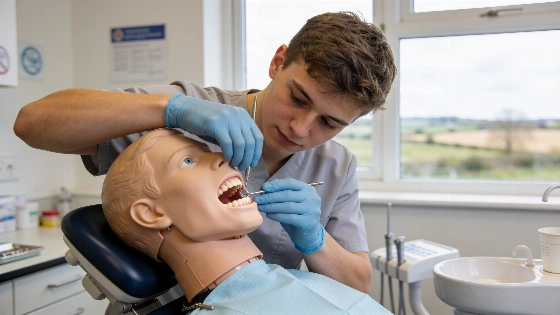
The university has welcomed its first students onto new BSc Dental Hygiene and Therapy and Gateway programmes. It is also running a foundation programme for dental nurses and other healthcare professionals who want to retrain or build new skills.
For this proposal, the decisive milestones are a confirmed Dental Authority Status decision, progress through the General Dental Council approval process and the necessary Privy Council approval. No independent publication confirming those decisions or dates was identified in the current search.
Johnson said the university had made "excellent progress". She is working with other Lincolnshire MPs to press ministers for funding for the first and continuing intakes of dental students.
After she sent a letter to the new health secretary this summer, the minister for health innovation agreed to meet Johnson, the university and other Lincolnshire MPs.
The workforce case has a practical basis. The university says where healthcare professionals train can influence where they later work. Local dental education could therefore help recruit and retain staff who understand the county's rural, coastal and underserved communities.
The point is clear.
NHS England dental statistics and local access assessments would provide the right basis for measuring the workforce gap. They would also show whether the problem is as severe as campaigners say. The wider NHS breakdown has already been documented in an earlier access report.
Lincolnshire's campaign has moved beyond formal letters. In June, the university toured parts of the county with a toothpaste-inspired vanilla ice cream served with mint sauce. The stunt promoted the proposed school and the so-called dental desert.
The tour began in Skegness and ended at the Lincolnshire Show. Campaign representatives then took the issue to Westminster.
The Department of Health and Social Care said the Government was delivering the biggest expansion of dental school places in 20 years. It said ministers were targeting areas where demand was greatest.
The department also said newly trained dentists would have to spend three years in the NHS. Ministers are working with the sector, including the British Dental Association, on longer-term reform.
James Frith, the minister responsible for dental health, is expected to meet Lincolnshire MPs in the near future.
The Lincolnshire dental school remains a proposal, not a functioning degree course. Its case rests on a reported access gap, an existing university institute and a workforce model linked to local NHS services.
Ministers should judge the bid against those conditions. If they want dental school expansion to reach one of England's clearest dental deserts, they should fund Lincolnshire rather than simply add places elsewhere.