
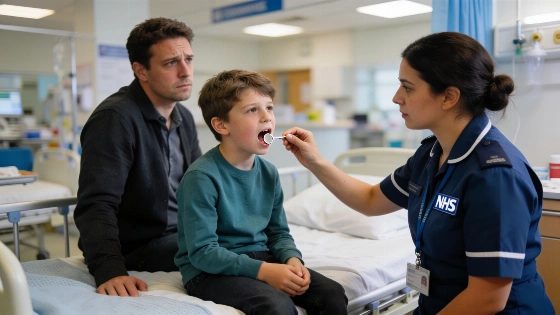
England's dental care system is under fire. New NHS England data shows that more children aged 5 to 9 are admitted to hospital for tooth decay than for acute tonsillitis. In 2025/2026, 21,787 children in this age group needed hospital treatment for tooth decay. That's almost twice as many as the 11,511 admitted for tonsillitis. This isn't a minor detail. It's a clear sign that prevention and NHS dental access are failing young children.
According to NHS estimates, around 14 million people in England are currently unable to access NHS dental services, a dramatic rise from 4 million before the pandemic.
Cobourne says it's indefensible that so many children only get dental care once they reach hospital. He points to the government's promise to overhaul the NHS dental contract. He says only real reform-focused on prevention, better access, and keeping skilled staff-will turn things around. The Faculty of Dental Surgery is pushing the government to act, with prevention and workforce retention at the centre.
Local councils are trying to fill the gap. Cllr Dr Wendy Taylor, chair of the LGA Health and Wellbeing Committee, says poor oral health affects children's speech, sleep, eating, and wellbeing. She mentions council-led efforts like the Supervised Toothbrushing programme. But she warns that affordable dental care is still out of reach in many places, especially in rural, coastal, and deprived areas. "Equal access to NHS dental services is vital for every community to ensure all parents have the same opportunities to look after their children's health. It is vital that the current dental contract is reviewed to make NHS dentistry more viable. There is still more to do to ensure equitable care for all communities."
NHS dental treatment in England is free for children under 18 and for young people under 19 in full-time education, but in the most deprived areas, children are still far more likely to require tooth extractions due to decay, highlighting persistent inequalities in oral health.
The numbers are stark. Tens of thousands of children are suffering pain and disruption that could have been prevented if the NHS dental system worked as it should. The government keeps promising contract reform. Now those promises face a real test. Without urgent, deep changes to focus on prevention and restore access, children in England will keep paying the price for a system that has lost its way.
Even though NHS dental care is free for children and young people in full-time education, adult dental costs keep rising. As of April 2026, the NHS Business Services Authority lists Band 1 treatment at £27.90, Band 2 at £76.60, and Band 3 at £332.10. Urgent dental care is also £27.90. These charges, along with staff shortages and regional gaps, have made the access crisis worse.
When children or adults have urgent dental pain or infection, NHS advice now tells them to use NHS 111 online or call 111, instead of going straight to hospital emergency departments. This change shows how the lack of regular dental access is putting more pressure on urgent care and why full reform is needed.