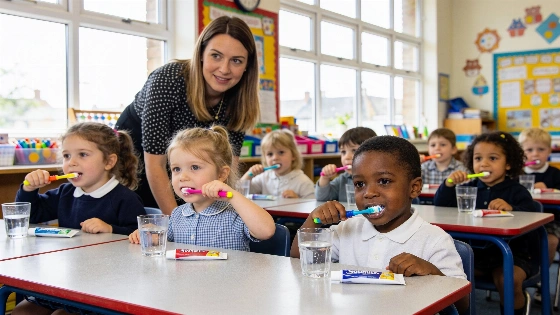
Tooth decay among young children in Knowsley is facing a direct challenge: more than 2,000 children aged 2 to 7 are now brushing their teeth every day under adult supervision at school, thanks to the All Together Smiling programme. The initiative, launched in April 2024, is not just another awareness campaign-it is a hands-on intervention designed to break the cycle of poor oral health that has plagued the borough for years.
What sets this programme apart is its scale and structure. Funded by NHS Cheshire and Merseyside and Knowsley Council, and delivered by Beyond, the children and young people's transformation programme, All Together Smiling embeds supervised toothbrushing directly into the daily routine of 49 early years childcare settings and primary schools across Knowsley. Each participating child receives an oral health pack containing a toothbrush, fluoride toothpaste, and a leaflet with key messages for families-ensuring the lessons don't stop at the school gate.
The evidence-based approach is clear: supervised brushing, peer modelling, and consistent messaging are proven to reduce tooth decay and the need for extractions among five-year-olds. The programme's communication campaigns reinforce these habits, aiming to create a ripple effect that reaches into homes and communities. St Annes Catholic Primary School in Huyton has even featured in a new short film, showcasing the power of children learning from each other and normalising good oral hygiene. The video is available for viewing on YouTube, offering a glimpse into the real-world impact of peer-led toothbrushing.
Behind the numbers lies a simple but powerful set of rules for families: brush twice daily, use family fluoride toothpaste (1450ppm), supervise children under seven, and spit-don't rinse-after brushing. These are not just recommendations; they are the backbone of a strategy to instil lifelong habits and close the gap in oral health inequalities that have long disadvantaged children in the region.
Cllr Christine Bannon, Cabinet Member for Health, is unequivocal: "I'm delighted with the success of the programme here in Knowsley and it's really important that good oral hygiene is encouraged from a young age. Through this engaging programme, we know that children's interest in brushing their teeth has increased and what they are learning in the early years or school setting is being replicated at home."
The stakes are high. Tooth decay remains one of the leading causes of hospital admissions for children in England, and Knowsley has historically been among the hardest hit. By embedding supervised brushing into the fabric of early education, the All Together Smiling programme is not just treating symptoms-it is attacking the root cause. If the momentum continues, Knowsley could become a model for how targeted, evidence-driven public health interventions can deliver real change where it matters most: in the daily lives of children and families. The message is unmistakable-prevention is not a slogan, it is a system, and Knowsley is proving that with the right investment and leadership, even entrenched health inequalities can be tackled head-on.