
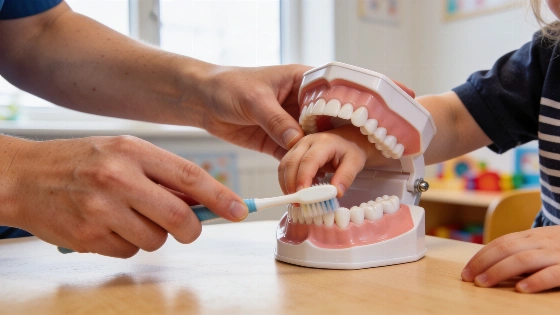
Children in the Western Isles learn about oral health through play, with the local dental team making care feel safe and approachable during Childsmile Weeks.
Childsmile is celebrating 20 years as Scotland's national programme for children's oral health. Its work pairs practical prevention with activities that help children feel confident and included as they learn to care for their teeth.
Research into school-based oral-health programmes has used clinical measures such as tooth decay and the number of decayed, missing and filled teeth to assess outcomes. The reviewed evidence does not provide confirmed Childsmile-specific figures.
Prevention built into everyday learning
The programme works across three connected areas. Supervised toothbrushing helps children establish healthy routines. Community and dental practice support aim to improve access to preventative care, while fluoride varnish offers additional protection against tooth decay.
That structure gives Childsmile a clear public-health role. Prevention reaches children where they learn and grow instead of relying solely on occasional dental visits.
The model matters alongside separate reporting on pressure around children's dental access in earlier coverage. Childsmile addresses the problem at an earlier stage by linking education with preventative care and family support.
The reviewed material does not provide an official Childsmile annual report, budget figure, child-coverage total or programme-specific effectiveness estimate. The available clinical evidence concerns school oral-health programmes more broadly rather than verified results for Childsmile itself.
Why Childsmile Weeks matter
In the Western Isles, the local team uses play to make oral health easier to understand. Children encounter tooth care through stories and games, with creative activities replacing a formal setting that may feel unfamiliar or intimidating.
That method carries the health message. It makes the subject accessible to children at different ages and stages of development.
The approach reflects the United Nations Convention on the Rights of the Child (UNCRC). Children have the right to the best possible health care and to play, learn and develop in ways appropriate to their age and stage. They should also be able to use health services in environments where they feel safe, respected and included.
By making oral health education playful and welcoming, Childsmile Weeks support those principles while helping children build positive attitudes towards toothbrushing and dental visits. The stated aim is healthier teeth today and foundations for confident oral health throughout life.
A long-term partnership around children
NHS Western Isles says the programme depends on nurseries and schools working with families and dental teams. Prevention reaches children through familiar settings, while families receive support beyond the dental practice.
After 20 years, Childsmile's value lies in the practical link between care and confidence. NHS Western Isles treats the programme as a child-centred prevention model that makes oral health education accessible while keeping children's rights and experience at the heart of care.