
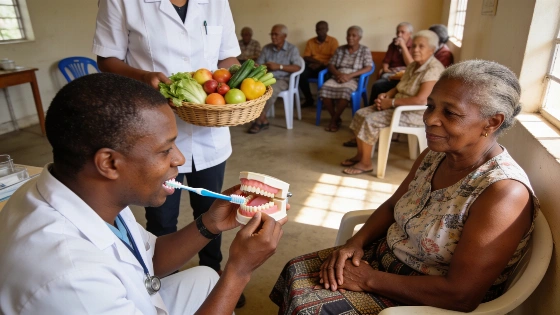
In Khayelitsha, older people are being told to stop waiting for pain before seeing a dentist. At a recent oral health session, the message was simple: prevention is essential, not optional.
A global review in 2026 found that while the age-standardised prevalence of major oral diseases dropped by 1.55% from 2019 to 2023, the absolute number of people affected continued to rise due to population ageing and demographic shifts.
Dr Sukha was direct. "Good oral health starts with simple daily habits. Brushing twice a day with fluoride toothpaste, cutting down on sugary foods and drinks, and going for regular dental check-ups can stop many common oral health problems before they get serious," he said. He warned that waiting for pain is a bad bet. He told residents to watch for changes in their mouths and get help as soon as they notice something wrong.
Nutrition often gets ignored in oral health. Mahlaka explained how diet affects teeth and gums. She pushed for more fruit, vegetables, and water, and warned about sugary foods and drinks. Her point was clear: what you eat shapes your oral health.
In a South African study of 4,652 adults aged 20-64, researchers found that self-assessed oral health is closely linked to social factors, highlighting the importance of prevention and access to care rather than only treating pain.
The Western Cape Department of Health and Wellness is doing more than just holding sessions. Through local clinics and dental outreach, including mobile dental vans, the department is working to bring preventive and routine oral care to the community. These services aim to catch problems early, teach people, and send patients for specialist care if needed.
There have also been warnings about fake dental implant subsidy ads aimed at older adults, as reported earlier. This shows why trusted, easy-to-reach information and services matter. The department's focus on prevention is a direct answer to the real challenges older adults face in the area.
Oral disease hits hardest when people put off care. The evidence is clear: daily habits and early action are the best defence. The department's approach-practical advice, easy-to-access services, and working with the community-sets a clear standard. Prevention is not just for a few, but for everyone. For older people in Khayelitsha, the message is simple: take care of your oral health now, or risk bigger problems later.