Immediate tooth replacement with minimal discomfort is now a reality. In Ahmedabad, Dr. Bharat Agravat has published a clinical guide that changes how dental implants are planned and placed in 2026, focusing on digital accuracy and patient comfort.
The 2025 joint position statement by AAE and AAOMR emphasizes that CBCT should be used selectively for dental diagnostics, not routinely, and upholds the ALADAIP principle: radiation dose must be as low as diagnostically acceptable, considering clinical indications and patient factors.
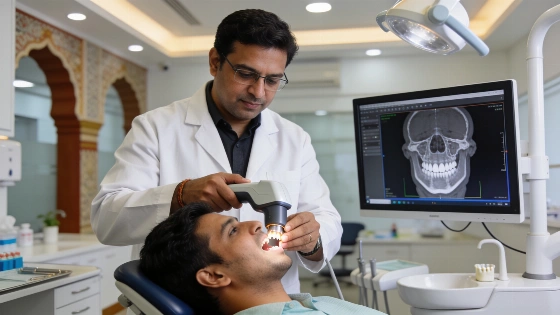
With this approach, custom 3D-printed surgical guides allow for flapless, minimally invasive placement, which reduces bleeding and swelling. For some patients, the digital protocol even makes it possible to fit a temporary crown on the same day, so they leave with a working, natural-looking tooth. Faster bone integration, thanks to new implant surfaces and biomaterials, supports high long-term success rates, even in complex full-mouth cases.
Dr. Bharat Agravat, who has more than 31 years of clinical experience and multiple awards, is direct about the change: "Modern dentistry in 2026 is defined by predictable precision. Patients no longer need to endure long, painful recovery periods or uncertain outcomes. With digital surgical templates and customized treatment planning, we can restore smiles with greater stability, natural aesthetics, and exceptional patient comfort."
For full-arch implant cases, Singapore's national health system highlights that implant and prosthesis positioning is now routinely planned using digital software, embedding digital workflows into standard protocols at major clinics.
Ahmedabad, India's first heritage city, is now drawing dental implant patients from across India and abroad, with Dr. Agravat's methods attracting attention. He also trains other professionals through the Dr. Agravat Dental Academy and supports patient care with his oral hygiene product line.
This digital shift is not limited to one clinic. As reported earlier, AI-powered prosthetics and digital workflows are changing patient care and driving industry growth worldwide. Dr. Agravat's protocol is a practical example of this change in action.
Collaboration is growing as well. Dr. Kartavya Agravat, a dental surgeon and AI healthcare specialist, is involved with ATH, a digital health assessment platform that uses AI to make health checks more accessible. ATH is not a replacement for professional diagnosis, but it shows how AI is becoming part of patient engagement and preventive care.
What stands out in this development is the focus on transparency, biocompatibility, and long-term results. Dr. Agravat's background-advanced training at Harvard, NYU, and Buffalo, plus mentorship from Dr. Paulo Malo-reflects the clinical standards behind the protocol. The guide's release signals that digital implantology is now the standard for restorative dentistry in Ahmedabad.
A review by StomDentalCentre notes that 3D imaging is still the preferred method for implant planning, as it lets clinicians check bone width and height, nerve position, and sinus proximity before surgery. The same review reports that guided implant surgery usually results in an average deviation of about 1.2 mm at the entry point and 1.4 mm at the apex, so a safety margin of at least 2 mm is recommended. These practices are now part of digital implant workflows worldwide, supporting safety and predictability for both patients and clinicians. StomDentalCentre clinical review.