
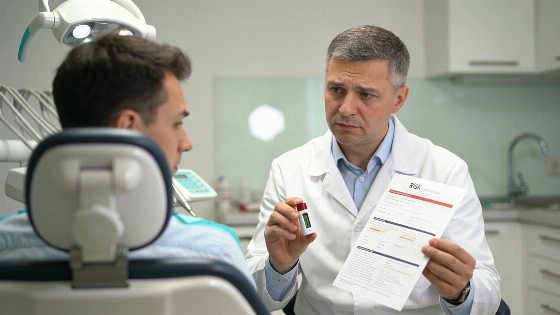
Dental clinics may soon play a bigger part in finding people at risk for diabetes. A new European white paper urges dental teams to screen patients for diabetes risk. The plan calls for using risk questionnaires and quick blood tests in the dental chair. If a patient is at risk, the dentist should send them straight to a doctor.
The white paper highlights that periodontitis currently has the strongest evidence base for links to systemic health, with treatment shown to improve glycaemic control in people with diabetes.
The white paper also turns to the medical side. It says doctors, nurses, and other health workers should learn to ask about oral health and do a quick check for mouth disease. The goal is to set up two-way screening and referrals, breaking down the old walls between dental and general health care.
There is already some evidence for this approach. Research in the paper, also covered by Dentistry in March, found that 35% of dental patients with no known diabetes had HbA1c levels in the diabetes or pre-diabetes range. This means a routine dental visit could be the first time a patient learns they are at risk for a serious long-term illness.
The white paper, published in the journal Periodontology 2000, positions oral health as a public health priority that should be embedded in non-communicable disease strategies and universal health coverage models.
Moritz Kebschull, the main author and former EFP president, puts it simply: "Oral health deserves a place within a more integrated approach to patient care." The white paper also says that oral health, prevention, and teamwork between professions should be part of training for all health and social care workers.
This push for joined-up care comes as health systems across Europe try to get better at finding and stopping chronic diseases early. The call for dental teams to check for diabetes risk matches the urgency seen in places like Somerset, where the NHS dental access crisis has left thousands without basic care.
For now, the white paper's ideas are just recommendations. But the message is clear. Dentistry is no longer a world apart. If dental teams take on this new role, they could become an early warning system for diabetes and other health problems. The profession now faces a choice: stay on the sidelines, or join the wider push for joined-up patient care. The evidence is still growing, but the direction is set-and for patients, the outcome could be life-changing.