
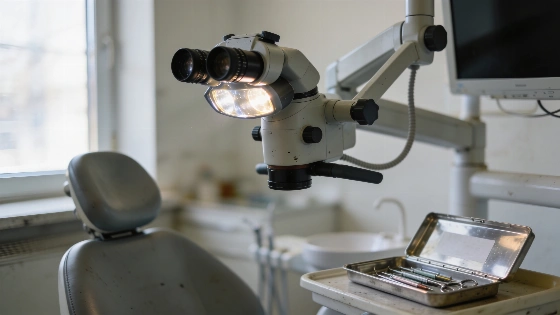
In 2025, surgical microscopes held 56.98% of the market, while North America accounted for 41.23% of demand. Those figures point to a market that is already moving beyond a narrow specialist base.
Revenue is forecast to rise from USD 344.23 million in 2026 to USD 909.52 million by 2035. That equals a projected CAGR of 11.4% through 2035.
The broader dental equipment market is forecast to rise from $8.31 billion in 2026 to $11.48 billion by 2031, representing a 5.5% CAGR.
That growth comes with a steep entry price.
Premium optics meet a wider clinical market
Dental microscope systems cost between $10,000 and $50,000, depending on their features. Portable systems represented 63.05% of the market by modality. LED illumination accounted for 61.22%.
Bright, consistent operating fields matter in current purchasing decisions. The figures also show why premium optics remain central to the market.
The FDA's recognized consensus-standards registry includes standards covering dental and ENT devices and endodontic products. In the reviewed listing dated September 28, 2026, no separate standard specifically dedicated to dental microscopes was identified.
Manufacturers are working on stronger magnification, digital systems, integrated monitors and better lighting. Newer platforms pair optical hardware with 4K and high-resolution imaging. Some also offer fluorescence, 3D heads-up visualisation and suspension systems that reduce physical strain during treatment.
Procurement is becoming a workflow decision
Hospitals and dental practices are looking at more than the optical instrument itself. They are asking how a microscope fits into documentation, teaching, case review and connected clinical work.
Cloud-based case records could add value when captured images become part of the wider digital file. That depends on how well the system fits the practice.
An earlier implant-market report also described technology upgrades and aesthetic demand as forces changing dental purchasing.
Clinical records now carry more weight in procurement decisions. Materials on periodontal treatment requirements describe detailed charting, full-mouth radiographs and related records. Imaging and digital capture are becoming part of routine dental work.
AI-assisted image interpretation is one of the market's main future directions. The source material presents it as a development priority, not an established clinical outcome.
Connected workflows face the same test. Their value will depend on implementation, staff training and how well teams use the data.
Clinical examination remains central to diagnosis. In September 2026, the American Dental Association's living guideline reaffirmed the importance of oral examinations for early detection of oral cancer. A biopsy remains the gold standard for definitive diagnosis, according to the ADA living guideline.
That distinction matters. Microscopes support visualisation. They do not replace clinical examination or pathology.
Cost and capability will determine adoption
High acquisition costs remain the main barrier. Practices must also pay for training and absorb workflow changes before magnification becomes routine.
Clinicians face a learning curve.
Those demands can delay returns, even when the equipment offers a better view during difficult procedures.
Deepa Pandey, Senior Research Analyst, authored the report. Aditi Shivarkar, VP Research, reviewed it. Pandey has more than five years of healthcare market research experience.
The report identifies better visualisation, digital imaging, ergonomic design, AI-assisted interpretation and service support as the main areas shaping competition.
Independent Reuters health-news summaries available in late September 2026 contained no confirmed report of a sharp market shift specific to dental microscopes.
The documented backdrop is more limited. It consists of rising dental-equipment demand, the clinical focus on examination and documentation, and continued regulatory attention to dental devices.
The strongest profit pools are likely to sit where microscopes connect with imaging software, training and maintenance. Suppliers will need to show clinical value and account for implementation costs and total ownership costs.
The market is moving beyond isolated optical hardware. Adoption will depend on whether suppliers can make the full workflow work for dental practices.