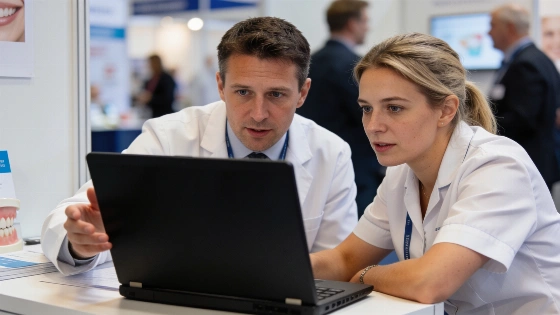
At Dentistry Show London 2026, BeCertain introduced Dental i, an AI-assisted product designed to help dentists read and record dental conditions.
Interest at the event gives the product an early public test. It does not show that practices are using it routinely.
An independent review of AI in orthodontics finds the strongest current applications in structured image-analysis tasks, while evidence for clinical triage, referral pathways and treatment planning is less mature.
From research to a product launch
In a LinkedIn post, BeCertain said Dental i draws on research conducted at King's Faculty of Dentistry, Oral & Craniofacial Sciences, with backing from U.K. research and innovation funding bodies. The company describes the software as privacy-first and trustworthy, and says it is aimed at everyday practices across the U.K. Those are BeCertain's claims, not independent assessments of performance or privacy safeguards.
The launch moves the project from research-focused work toward a product shown to potential users. BeCertain's post reported booth traffic and attendance at a clinical theatre talk on AI in everyday practice, led by co-founder and Chief Medical Officer Prof Owen Addison.
The post gave no attendance figures and offered no evidence that event interest led to purchases. A review of orthodontic AI evidence also finds less mature evidence for broader clinical pathways than for structured image analysis.
Independent materials reviewed for this report do not provide verifiable Dental i figures for sensitivity, specificity, false-positive rates, analysis time, clinic deployments, pricing, revenue or users. A 2026 review describes AI research across orthodontic diagnosis, treatment planning, monitoring and documentation, while emphasizing that clinical maturity varies by task; it does not validate Dental i as an autonomous diagnostic system.
Interest is not adoption
For practices, the practical question is whether Dental i can fit into routine clinical work while meeting expectations around privacy and trust. The available information describes its intended role but does not establish diagnostic performance. It also offers no evidence of workflow benefits or pricing, and reports no customer uptake figures.
Independent searches found no verified evidence of sustained commercial deployment. They also found no sales data or official regulatory decision for Dental i.
The launch has put BeCertain's first product in front of dental professionals. Conference traffic alone does not establish a market foothold, and the company still needs to show that professional interest converts into paying customers.
Current independent research supports a cautious view of dental AI as a tool to assist clinicians rather than an autonomous decision-maker.