The sessions ran in two age groups at Baghat Chowk on September 26, 2026. Forty-five college students attended first. Then came 55 school students.
The Jammu and Kashmir administration has been developing plans for an Artificial Intelligence Centre of Excellence, indicating that digital health and AI are becoming part of the region's wider innovation agenda.
The technology looked for possible early dental concerns. Dental professionals were expected to handle any follow-up.
A wider national search found no separate release from the NCC, Ministry of Defence, PIB or a major wire service that independently confirmed the Srinagar programme. The attendance figures and schedule therefore remain tied to the local account.
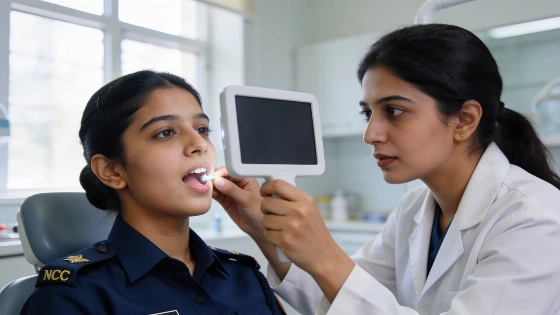
The first group included 45 college students aged 17 to 20. Their session ran from 11 am to noon. The second group included 55 school students aged 13 to 16 and met from noon to 1 pm.
The date changed. The NCC unit told Safe Hands it could not send cadets on September 25, the original date. An official communication then set the sessions for Saturday, September 26, 2026. Col. Sharad Sharma, Commanding Officer, signed it.
A United News of India report dated September 25, 2026 described a dental awareness camp in Delhi that used AI-driven diagnostics for early detection and prevention, showing that similar screening-led public health events are also appearing elsewhere in India.
Dr. Mumin Rashid, campaign head of the Awareness Division at Safe Hands Dentistry, opened the proceedings. He explained the "Reaching the Unreached" campaign and its outreach work.
Dr. Rashid said dental care should not begin only after pain starts. He focused on regular examinations, proper brushing, balanced food choices and timely professional advice. The cadets also watched a practical toothbrushing demonstration.
Nutrition coach Rina Ojeda focused on the growing appeal of ultra-processed food among young people. She discussed the role of marketing, packaging, convenience and behavioural triggers in repeated consumption. The session compared whole foods with heavily processed products and connected diet with energy, general wellbeing and oral health.
Dr. Tieeka Rashid, Clinical Director of Safe Hands Dental Health and Awareness Centre, supervised the clinical team. Staff used AI-assisted technology for the dental checks. The cadets saw how digital tools can support dentistry, but professional assessment and follow-up remained central when a possible concern appeared.
The programme kept screening and health education together. Awareness did not replace clinical care.
The format also fits a wider pattern in community dentistry. A related student health initiative showed how education settings can carry infection prevention and public-health messages. The Srinagar programme added direct preventive screening through a youth partnership.
NCC and other youth partnerships in India have also been linked to dental-awareness campaigns. Schools and colleges can bring oral-health messages and early screening to young people. That pattern makes the reported format plausible. It does not independently confirm the Srinagar event or its participant count.
"Our mission with the 'Reaching the Unreached' campaign is to bridge the gap between advanced clinical care and preventative health education. By pairing AI diagnostic tools with holistic guidance on nutrition, we empower young cadets to make informed decisions for long-term health," Dr. Tieeka Rashid said.
The two-group format helped the centre manage 100 screenings while keeping the education sessions in place. The participants were school and college students, ages when oral hygiene and food habits can become long-term routines.
AI was one part of the service. Screening, education and follow-up stayed connected. That was the point.