
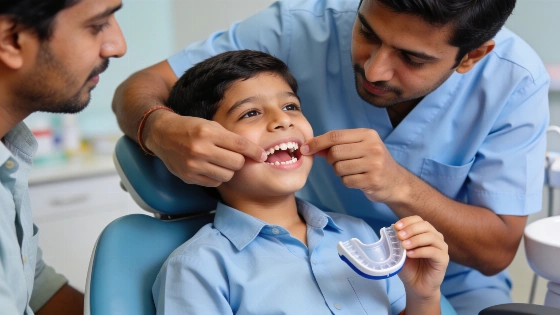
A parent, teacher or bystander may handle an injured tooth before any dentist sees it. Their first steps can affect whether the tooth is preserved or enters a lifelong cycle of treatment and rehabilitation.
Traumatic dental injuries have been described as a neglected condition with a global burden that could rank fifth in prevalence among common diseases and injuries.
The problem reaches well beyond dental clinics. Falls, road traffic accidents, sports injuries, domestic violence and everyday accidents can damage teeth. Dental trauma is a public-health and patient-safety concern, not only a cosmetic problem.
Global Dental and Oral Trauma Day takes place every year on September 21 with support from the Indian Society of Dental Traumatology. Its focus is prevention, timely management and fair access to care.
The effects can last for years.
The International Association of Dental Traumatology published 2020 guidance for permanent-tooth trauma in two parts: fractures and luxations, and avulsion of permanent teeth. For an avulsed permanent tooth, the practical priority is rapid action; if immediate replantation is not possible, the tooth should be kept moist in milk, saline or a specialised transport medium.
Logani said the focus should move beyond treatment after an injury. People also need to learn how to prevent injuries and what to do right away. The first person handling a damaged tooth may be a parent, teacher, coach or bystander.
For a knocked-out permanent tooth, clinical guidance calls for replantation as soon as possible. Summaries of AAE trauma guidance identify roughly 60 minutes outside the mouth as an important practical window for the best chance of retaining the tooth.
If immediate replantation is not possible, the tooth should be handled by the crown. It should stay moist in milk, saline or a specialised transport solution until professional care is available.
The clock matters.
Children face particular risks. Dr Nitesh Tewari, Professor of Pediatric Dentistry at CDER, AIIMS Delhi, said an injury can affect facial development, appearance, psychological wellbeing and quality of life. Parents should seek timely assessment instead of dismissing trauma as "just a broken tooth".
The access problem also appears in earlier access reporting on children's oral health. Recognising harm is not enough when timely care is difficult to reach.
Dr Sidhartha Sharma, Associate Professor of Endodontics at CDER, AIIMS, Delhi, said people need clear instructions about an injured tooth. They need to know what to do, what to avoid, how to transport it and where to obtain care.
Sharma called for dental trauma education in schools, sports facilities, emergency services and community settings. That training could reach people before a dental professional does.
The IADT recommendations published in Dental Traumatology in 2020 separate the management of fractures and luxations from avulsion of permanent teeth. Each injury requires its own decisions, immediate assessment and later endodontic follow-up. There is no single response for every dental accident.
Teachers, coaches and parents should learn to recognise serious injuries and take the right immediate steps. Tewari also identified safer sports practices, suitable protective equipment and road safety measures as prevention priorities for children and young people.
The evidence points to a practical public-health task. Prevention and first-aid education must reach the people present when an injury occurs. Waiting until a patient reaches a dental chair can permanently narrow the chance of preserving a tooth.