
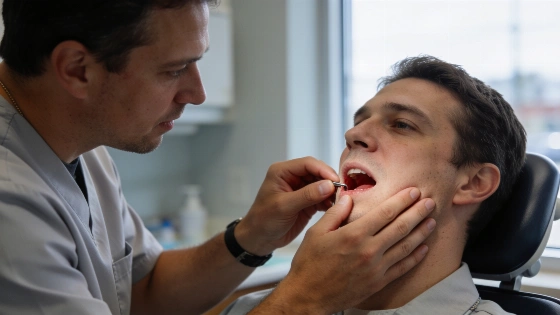
A knocked-out tooth becomes harder to save with each passing minute. Severe pain, spreading swelling, bleeding that will not stop and dental trauma all call for urgent dental care.
For a knocked-out permanent tooth, the best chance of preservation comes when it is replanted as quickly as possible; dental trauma guidance commonly identifies roughly 30-60 minutes as a critical window.
Speed matters.
Persistent or intense tooth pain is often the first sign. A deep cavity, a cracked tooth or an infection in the pulp can cause severe discomfort. Over-the-counter medicine may ease the pain for a while. It cannot fix the cause.
Delay can give an abscess or spreading infection time to develop. Severe pain becomes more concerning with swelling, fever, pus, a loose tooth or bleeding, according to clinical emergency guidance from North Sydney Dentistry.
Swelling needs close attention.
Inflammation around the gums or face often points to an infection. Treatment may include antibiotics or drainage. Swelling that worsens quickly calls for immediate evaluation because an untreated infection can move into nearby tissue and affect other parts of the body.
People with diabetes, immune disorders or heart conditions may face faster progression or slower healing. Dentists consider those conditions when deciding how quickly care is needed. Swelling that reaches the eye or neck also raises concern. So do a raised tongue, trouble opening the mouth, fever, chills or a clear decline in general wellbeing.
Swelling that threatens the airway, spreads through the face or neck, or makes breathing or swallowing difficult requires immediate emergency evaluation rather than waiting for a dental appointment.
Bleeding that does not stop after gentle pressure is another emergency warning. Trauma, gum disease or a complication after a dental procedure may be responsible. A dentist needs to find the cause and stabilize the area. Home measures may not be enough.
Bleeding that continues after 15-20 minutes of firm pressure is considered an emergency. People who take anticoagulants, undergo chemotherapy or live with cardiovascular problems may need help sooner, according to emergency bleeding guidance. The difficulty many patients face in reaching dental care is covered in earlier access reporting. During uncontrolled bleeding, professional assessment comes first.
Dental trauma needs quick, careful handling. Hold a knocked-out tooth by the crown, not the root. Keep it moist in milk, saline or a preservation solution. Take it to a dentist without delay.
If it is safe, guidance advises putting the tooth back in immediately. If that is not safe, transport it urgently for professional care. A broken tooth may expose inner structures and raise the risk of pain or infection. Dentists examine the fracture before choosing a repair or restoration.
Even mild sensitivity, minor swelling or discomfort that does not go away deserves attention. These symptoms can become a more serious emergency. Early evaluation gives dentists a chance to act before treatment grows more complex.
While waiting for care, rinse gently with warm water. Avoid chewing on the affected side. Temporary pain relief may help. These steps only control symptoms. They do not replace treatment.
The practical rule is simple: sudden severe pain, swelling, uncontrolled bleeding or dental trauma should prompt a call to a dental office. Do not rely on prolonged self-treatment.
Rapid evaluation can ease pain, protect a damaged tooth and reduce the chance that a manageable problem becomes a larger threat to oral health.