
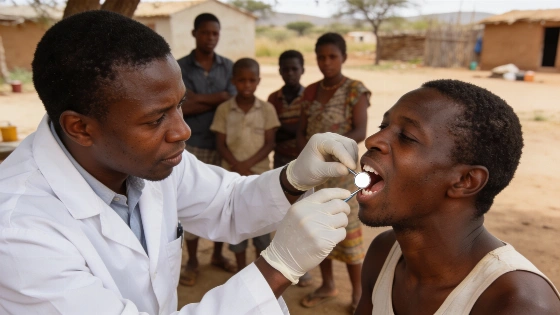
Late diagnoses and missed warning signs are driving concern about oral cancer in Namibia's Omusati region. In response, oral health teams are stepping out of clinics and into neighborhoods, meeting people where they live. During National Oral Health Awareness Week, dental professionals are bringing education and screenings directly to the community instead of waiting for patients to seek them out.
In 2024, approximately 47.7 million adults in the United States used tobacco products, highlighting the global scale of tobacco as a risk factor for oral cancer.
Teams made up of dental and health professionals are visiting all four districts, holding outreach events at five sites: two in Outapi, and one each in Okahao, Tsandi, and Oshikuku. They are offering oral screenings, showing proper brushing and hygiene techniques, and referring people for further care when needed. The goal is to catch problems early, before they become serious.
Oral cancer is a growing problem, often developing quietly in its early stages. Namakalu points to tobacco use, heavy drinking, and HPV infection as major risk factors. Many cases are found too late because most people do not recognize the early signs. He urges the public to watch for mouth sores that do not heal after two weeks, red or white patches, unexplained lumps, numbness, or trouble chewing and swallowing-symptoms that should prompt a visit to a health facility.
Namibia's National Oral Health Week in 2026 was officially recognized at the national level, with the launch of the National Integrated Campaign for Non-communicable Diseases and the commemoration of Oral Health Week in Keetmanshoop on September 14, 2026, demonstrating the campaign's relevance beyond the Omusati region.
Anyone with ongoing tooth pain, bleeding or swollen gums, loose teeth, or swelling of the face or jaw should seek dental care quickly. The outreach teams are not only providing education and screenings, but also encouraging communities to "learn, unlearn and relearn" the basics of oral disease prevention and health promotion.
This approach marks a shift in public health strategy, aiming to prevent oral diseases from being overlooked due to lack of awareness or access. By making dental education and early detection part of everyday life, Omusati's oral health teams are working to make prevention and early action the standard for lasting oral health.