The new school will be based at the Edith Cavell Building on the Norfolk and Norwich University Hospital campus. It is planned as the UK's first new dental school since 2005.
The Greater Norwich Growth Board's Infrastructure Investment Fund is providing £1.5 million. The money will cover the shell and core of the facility. The school is expected to train up to 30 undergraduate students each year and build a local pipeline of dentists.
The 2026-2027 undergraduate dental training tariff is £38,650 plus market forces factor. NHS England says the tariff applies only to places within the approved annual intake target, while primary dental care provided by undergraduate students is usually free.
The access problem is severe.
Norfolk ranks among the lowest performing areas in the country for access to NHS dentistry. Daniel Elmer, the Leader of South Norfolk Council, said residents face long waiting lists and very few NHS dental appointments. Public NHS service-search listings also show at least one Norfolk-area practice that is not accepting NHS adult or child patients.
That is the gap the school is meant to address. Elmer said the need for change was clear and that local solutions were essential.
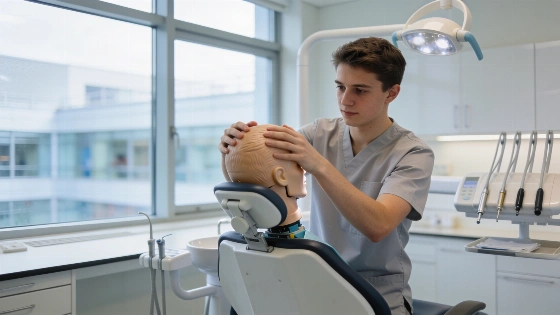
The University of East Anglia, or UEA, will provide match funding to fit out and equip the facility. Planned features include clinical-grade fittings, specialist training equipment, a teaching laboratory, seminar rooms and phantom heads. Students use phantom heads to simulate patient treatment.
NHS England is consulting on a 2027-2030 NHS Education Funding Agreement, which is intended to replace the current 2024-2027 agreement ending on 31 March 2027. The consultation provides the wider funding context for additional clinical training capacity, including new dental education provision.
The plan has a practical goal. Dentists trained in Norfolk could give local practices a stronger chance of recruiting locally trained clinicians.
The government's 2026-2027 tariff sets the undergraduate dental training rate at £38,650 plus market forces factor. NHS England says the payment applies only to places within the approved annual intake target.
Norfolk's problem is part of wider pressure on dental services. A recent regional report from Fermanagh and Omagh also described unresolved access problems and the need for concrete dental provision. Norfolk's plan focuses on the future workforce as well as current service capacity.
More expansion may follow. A further phase could extend the facilities within and beyond the Edith Cavell Building and add training places. Those proposals are still at the planning stage.
The policy backdrop is changing too. A new 2026 NHS dental payment direction takes effect on 30 September 2026. It introduces a funded quality improvement programme, support for annual appraisals and broader eligibility for discretionary payments.
Those measures concern the delivery of NHS dental services. They do not confirm extra places at the proposed Norfolk school.
Elmer said investment in skills education and healthcare infrastructure would support residents. He also linked the project to economic growth and a highly skilled local workforce.
The school will not clear NHS dental waiting lists overnight. It does give Norfolk a defined training capacity and a direct response to its workforce problem. If students start treating real patients in 2028, the region will have a route to a stronger local dental service.