Even people who brush every day are getting it wrong. After nearly sixty years in the clinic, a veteran periodontist-who asked not to be named-left the job with a blunt truth: brushing your teeth is boring, and most people do it badly. He is not alone. Research now shows that brushing harder or longer does not mean cleaner teeth.
A 2014 Cochrane review found that powered toothbrushes removed 11% more plaque than manual brushes after 1-3 months, and 21% more after 3 months, while also reducing gingivitis.
Andrew Terry, a senior lecturer at the University of Sydney's School of Dentistry, says about 30 percent of Australian adults have moderate to severe gum disease. That is directly linked to poor brushing. "Many people have never been shown what to do," Terry said. He points out that even dental ads from the 1980s and 1990s got the technique wrong, so whole generations missed out on proper advice.
Dental guidance in Germany recommends brushing at least twice daily for 2-3 minutes, ensuring all tooth surfaces and the gumline are cleaned. This advice is echoed by public health experts who stress that technique and thoroughness are more important than brushing force.
Oral health therapists at the University of Sydney's Dental School Simulation Clinic use disclosing tablets to show the truth. Even people with perfect-looking teeth who brushed that morning showed pink stains-fresh plaque. No one got away clean. The dye shows what the mirror hides: missed spots and poor cleaning, even for professionals.
Technique is what matters. For manual brushes, experts say use a gentle brush with a small head. Move it in small circles near the gum line. A public health explainer says to hold the brush at about a 45-degree angle to the gumline and use gentle, small motions. Do not scrub harder. With electric brushes, guide the head around each tooth and pause for a few seconds. Scrubbing side to side or using force does not help and can hurt. Many people skip the inside of the gums, which raises the risk even more.
Video studies back this up. When young adults were filmed brushing, most used a sawing, side-to-side motion-the exact thing experts warn against. Researchers called the results "remarkable and disturbing." Most thought their mouths were twice as clean as they really were. Parents also overstated how often their kids brushed, claiming twice-daily routines that did not happen.
The numbers show the damage. The Australian Institute of Health and Welfare found that 43 percent of children aged five to fourteen had moderate plaque build-up. Among adults, one in ten had missing teeth or other dental problems. One in twenty-five people over fifteen had lost all their natural teeth. Dr Adrian Webster from AIHW says poor oral health makes eating, speaking, and socialising painful and embarrassing.
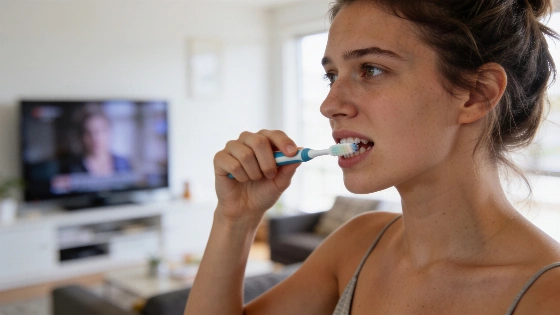
Oral health therapists at Sydney's clinic see these problems every day. Audrey Wong says teenagers often brush for just thirty seconds-"very, very quickly." Cindy Tran sees plaque that will not go away and more cases of gingivitis, periodontitis, and cavities. Angelee Murdoch, another therapist, does not care where people brush-she just wants them to do it for three minutes, even if that means walking around the living room or watching TV. "I never brush my teeth in the bathroom. It's boring."
For kids, Matthew Koma says good habits need to start early. Terry says he would rather see one careful brushing a day than two rushed ones. The message is clear: quality matters more than quantity.
The mouth is not separate from the rest of the body. Terry points out that oral bacteria have been found in blood clots of heart attack victims. Gum disease is also linked to osteoporosis, premature birth, and diabetes. The risks are bigger than most people think.
This problem is not just in Australia. As financial-press coverage explains, dental experts keep stressing the basics: remove plaque well, brush twice a day with fluoride toothpaste, clean between teeth, watch your diet, and get regular check-ups based on your own risk.
After decades of research and failed public messages, the answer is clear. Brushing harder and longer does not work. Without the right technique and real instruction, millions will keep suffering pain, losing teeth, and risking their health. Dental professionals, teachers, and policymakers need to focus on hands-on lessons and honest advice. The cost of not knowing is written in every neglected smile.