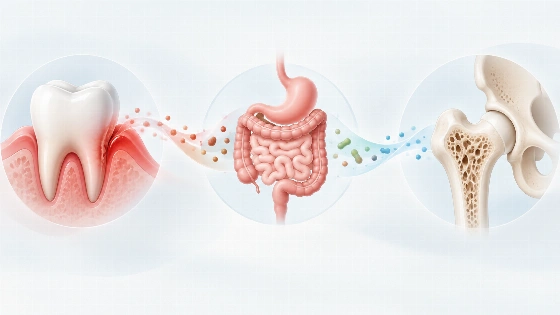
Chronic gum disease is not just a problem in the mouth. New research from Griffith University and Nanjing University in China shows it can drive bone loss all over the body in people with osteoporosis. The study, published in npy Biofilms Microbiomes, lays out a clear chain: inflammation from gum disease throws off gut bacteria, weakens the gut barrier, and ramps up inflammation throughout the body. This speeds up bone loss.
A PubMed Central review highlights that periodontitis in animal models leads to a persistent gut dysbiosis, reducing butyrate-producing bacteria and weakening the intestinal barrier.
The study's results are clear. Older people with both gum disease and osteoporosis have a much higher risk of fractures than those with just one of these problems. Gum disease was already known to cause bone loss in the jaw. Now, this research shows the damage goes far beyond the mouth. Gut bacteria help control bone health by affecting calcium absorption, inflammation, and hormones. When gum disease upsets the gut, it sets off a chain reaction that weakens bones throughout the body.
A clinical comparative study referenced by The Open Dentistry Journal identified osteoporosis as a systemic risk factor for periodontitis, supporting the concept of a two-way relationship between bone loss and periodontal disease.
With this new evidence, dentists and doctors need to see gum disease as a real, changeable risk in osteoporosis care. Oral health must be part of osteoporosis treatment plans. Ignoring the mouth-gut-bone link puts patients at risk.
Recent reviews in PubMed Central explain how this works. Gum disease changes gut bacteria, lowers the number of helpful short-chain fatty acid (SCFA) producers, and weakens the gut barrier. This raises inflammation and can make bone loss worse. Other findings show that osteoporosis itself is tied to changes in gut bacteria, problems with tryptophan metabolism, and more inflammation. All of these hurt bone health. For more, see the PubMed Central review.
A 2026 systematic review in PubMed on dental biofilm-induced gingivitis also found that hormone changes during the menstrual cycle and ovarian gonadotropin stimulation raise the risk of gum inflammation, even without extra dental plaque. This shows how body-wide factors and oral health are linked, and why care needs to be integrated. The full review is on PubMed.