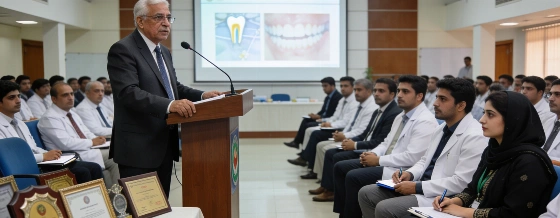
The 5th Annual Interdisciplinary Scientific Conference 2026 in Lahore did not hand out recognition easily. Shields and certificates went to those who broke new ground in dental science. The event brought academic achievement and clinical work together in front of a full house at Akhtar Saeed Medical and Dental College.
On 20 September 2026, the MDCAT exam was conducted simultaneously in 34 cities across Pakistan and at an international center in Riyadh, reflecting the scale and coordination of medical and dental admissions nationwide.
Prof. Moghees Baig spoke about surgical correction of facial deformity. He showed how dental, maxillofacial, and surgical care come together. Prof. Dr. Sabir Hussain focused on oral cancer management. He stressed the need to spot cancer early and act fast. Prof. Dr. Shahid Mehmood tackled failures in endodontic treatment. His session made the audience face tough clinical setbacks and look at ways to fix them.
In September 2026, the Lahore High Court was actively reviewing complaints regarding increased medical fees and regulatory changes. Notably, the PMDC withdrew its notification extending the BDS program to five years, reverting to the traditional four-year duration, following judicial scrutiny.
Industry was part of the action. Pharmaceutical and healthcare companies joined in, making sure the link between academia and industry was real. Dr. Kanza Nawadat, the conference moderator, kept things moving and on point. Principal Prof. Dr. Sadia Minhas wrapped up with thanks to everyone who contributed and organized, underlining the teamwork that ran through the event.
For those watching dental education and clinical skills evolve, the focus on postgraduate research and digital diagnostics matched themes reported earlier about mentorship and digital skills in aligner therapy. This time, the spotlight widened to oral cancer, endodontic failure, facial deformity, and the digital shift in diagnostics.
The 2026 conference did more than put academic work on display. It raised the bar for collaboration and professional recognition in Pakistani dentistry. By mixing established expertise, new research, and industry partnership, the event pointed toward a more connected, evidence-based future for dental care. This platform did not just reward achievement. It helped set the direction for clinical standards and scientific work ahead.