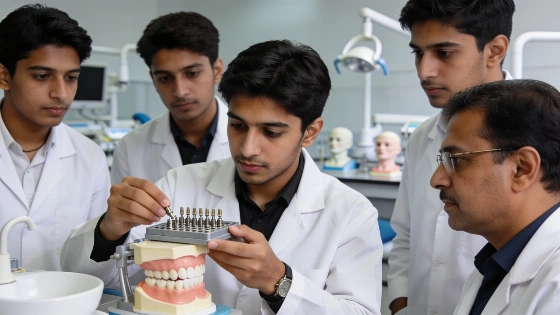
For undergraduates at Altamash Institute of Dental Medicine (AIDM), implant dentistry is no longer just something to read about. The Department of Prosthodontics set up a hands-on workshop that brought students straight to the tools, steps, and choices that shape modern implant care.
In September 2026, the Pakistan Medical and Dental Council (PMDC) withdrew its earlier decision to extend the Bachelor of Dental Surgery (BDS) program to five years, opting instead for a comprehensive review of dental education standards.
The workshop started with an academic session. Students went through when implants are needed, when they are not, and how to plan treatment. This gave them the evidence and reasoning behind each case. Right after, they moved to practical work. They watched demonstrations, practiced on models, and handled the same instruments and materials used in real implant cases. The faculty followed international advice that says hands-on, preclinical work is key for turning theory into real clinical skills in implant dentistry.
Across Pakistan in 2026, hands-on implantology courses featuring surgical kit demonstrations, CBCT planning, and model-based practice have become a widespread trend in dental education, reflecting a broader industry shift toward practical, skills-based training for undergraduates.
This workshop did not treat implant dentistry as just a single surgery. Students saw the whole process: patient checks, treatment planning, surgery, and the steps needed to restore teeth. Implant dentistry needs both surgical and prosthetic skills. The faculty made sure students learned not just how to place an implant, but why each step matters and what problems or challenges could come up later.
By the end, students had more than just new knowledge. They got to feel what implant dentistry is really like. This gave them an edge over students who only get classroom teaching. They received e-certificates, but the real gain was the confidence and clinical sense they took with them.
Getting early, structured experience with implants is now a must for undergraduates. Implants are a standard part of restorative and prosthodontic work. AIDM's workshop sets a clear example: dental schools need to move past passive learning and give students the skills, judgment, and flexibility that modern implant care demands. Waiting until postgraduate training is too late. The sooner students get real experience, the better they will be at giving safe, evidence-based care in a fast-changing field.
The Pakistan Medical and Dental Council's official report from September 2026 shows the focus was not just on changing the curriculum. The council also kept a close watch on medical and dental training. The council president inspected MDCAT 2026 exam centers during the same period, showing the tighter oversight and changing standards in dental education. official PMDC agenda
Public data also shows that Altamash Institute of Dental Medicine is still an active center for dental education in 2026. The institute continues to recruit residents and advertise faculty jobs in different dental fields. This confirms its role as a working clinical and academic base for new undergraduate training. current educational activity