
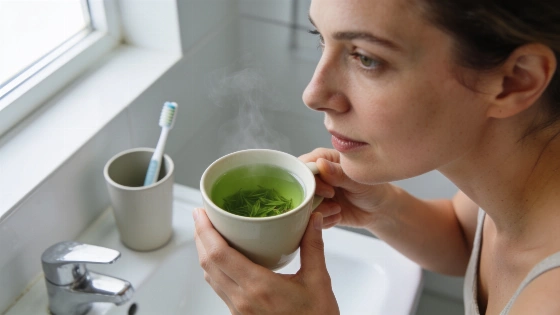
Green tea has a pH of around 6.5. That makes it slightly acidic, but less so than black tea, soda and juice. Served plain, it also contains no added sugar.
The strongest case for the drink is simple. It can replace a sugary or more acidic beverage while adding catechins and other polyphenols to the diet. It does not replace brushing or dental care.
Evidence for green tea's effect on plaque and gum health remains partial: laboratory and clinical findings suggest that its polyphenols may hinder bacterial growth and biofilm formation, but they do not replace standard oral hygiene.
How green tea may affect plaque and gums
Green tea's compounds may restrict the growth of harmful oral bacteria. They may also interfere with the way those bacteria form biofilms. Dental plaque is one type of biofilm. Plaque buildup can contribute to tooth decay.
The drink may also reduce gum inflammation and the risk of gum disease. The evidence points to a possible supporting effect, not a confirmed treatment.
That link to oral bacteria also appears in an earlier microbiome report. The claim here stays narrow: green tea may offer some benefits, but it is not a substitute for established oral hygiene.
Acidity still matters. Michelle Jorgensen, D.D.S., calls it the biggest concern with tea intake. Acidic conditions can reduce tooth mineralisation and help bacteria grow. That can raise the risk of cavities and enamel erosion.
NIDCR guidance places any possible benefit from green tea in a supporting role: no beverage substitutes for daily brushing with fluoride toothpaste, cleaning between the teeth and regular dental care.
Plain green tea has another practical advantage. It contains no added sugar.
Too many carbohydrate-rich foods and drinks, especially those with added sugars, are linked with poorer dental health and cavities. As reflected in CDC oral-health guidance, unsweetened tea helps mainly when it replaces a sugary drink. It is not preventive medicine.
Brewing matters less than what goes in the cup
Brewing involves a trade-off. A longer brew may raise antioxidant activity, but it can also make the tea bitter. The source places the useful balance between 10 and 15 minutes.
Tea makers may give different directions. When they do, follow the instructions for water temperature, tea quantity and brewing time.
Aronson recommends drinking the tea without sugar, honey or lemon when possible. The main choice is what the tea replaces. A better option is one that takes the place of a sugary or acidic beverage. It should not create another source of sugar or repeated acid exposure.
The daily habits that still do the heavy lifting
The American Dental Association recommends brushing twice a day for two minutes. It also recommends cleaning between the teeth once a day with floss or another interdental cleaner, such as an interdental brush or water flosser.
Plain water after eating or drinking can help neutralise acidity. Leaving a couple of hours between eating or drinking occasions gives saliva time to restore a healthier oral environment.
Saliva is the mouth's natural rinsing system. It helps maintain a neutral oral pH, remineralise teeth and protect against microorganisms.
Stay hydrated. Persistent dry mouth should be discussed with a dentist or physician, particularly when medication may be reducing saliva.
Regular dental examinations remain essential. Many oral diseases are silent in their earliest and most treatable stages. A dentist can find problems before they become emergencies and recommend changes suited to the patient's needs.
Green tea can be a sensible oral-health drink when it is plain and unsweetened. Its catechins may offer antioxidant, anti-inflammatory and antimicrobial activity. Its acidity and sugar profile also compare favourably with many common beverages.
Its role is supportive, not curative. The decisive routine remains twice-daily brushing, daily interdental cleaning, sensible drink choices and regular professional care.