
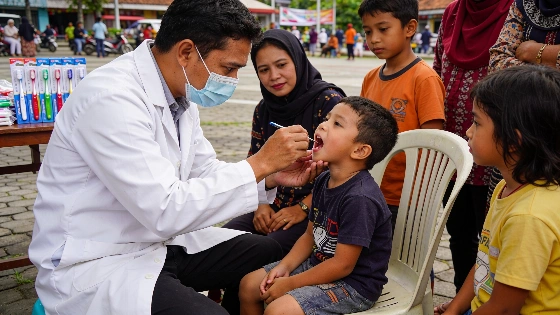
Indonesia's dental health gap is not just a number. It affects millions every day. In Cianjur Regency, more than half the people have dental or mouth problems, but only a small share get professional help. The Indonesian Health Survey (SKI) 2023 puts it plainly: 56.9% of Indonesians aged three and up have dental issues, but only 11.2% get treatment. These numbers show up again and again in reports from Antara, Bisnis, and other Indonesian outlets. The problem is nationwide.
Among Indonesians aged 65 and older, 43.6% have decayed or painful teeth, 46.5% have lost teeth, 14.4% have loose teeth, and 10.9% experience sensitivity, according to SKI 2023.
The campaign was the biggest of its kind in the area. It drew 7,000 people. About 2,000 children took part in hands-on lessons and group brushing. Another 5,000 adults got direct dental checks. The work didn't end there. Organizers handed out 15,000 toothbrush and toothpaste packs, hoping to start new habits in homes across Cianjur. This number was also reported by Koran Jakarta in its coverage of the campaign.
For the Indonesian Dental Association (PDGI) Cianjur Branch, this was more than a single event. Chairman drg. H. Muchamad Sarbini Wahid Heryanto, MKM, put it simply: "Dental and oral health is not only related to treatment when problems arise, but also how people have the right knowledge and habits to prevent it. Therefore, we appreciate this collaboration as a concrete step to bring dental education and health services closer to the community, as well as encouraging awareness of the importance of regular dental examinations."
In addition to the main event, the Cianjur campaign included a religious evening on September 11 and a community stage on September 12, indicating that the program extended beyond the primary day of free dental checks and continued to engage local residents.
ICD's role brought international standards and outside support. Dr. drg. RM Sri Hananto Seno, SpBM(K), MM, FICD, Chairman of ICD Section XVI Indonesia, said there needs to be "strong synergy between the private sector, government, and professional organizations" to raise dental health in the community. He stressed that both education and services must meet high standards and help people for the long run.
The campaign also teamed up with CRYSTALIN, which added something new. While Formula focused on oral care, CRYSTALIN gave out balanced pH mountain mineral water and backed local microbusinesses with a food area. This gave Bojong Village MSMEs a way to reach more people. The goal was to build healthy habits and help the local economy at the same time.
Community-led efforts like this have worked elsewhere too. As reported earlier in North Baddesley, bringing prevention and early checks straight to the public can make a real difference.
The Cianjur campaign stands out for its size, its mix of teaching and direct care, and its clear focus on prevention as the only way to fix Indonesia's dental health crisis. The teamwork between Formula, ICD, PDGI, and local government shows that when companies, professionals, and communities work together, even tough public health problems can be tackled. This is more than a campaign. It's a real-world plan for closing the oral health gap in Indonesia.